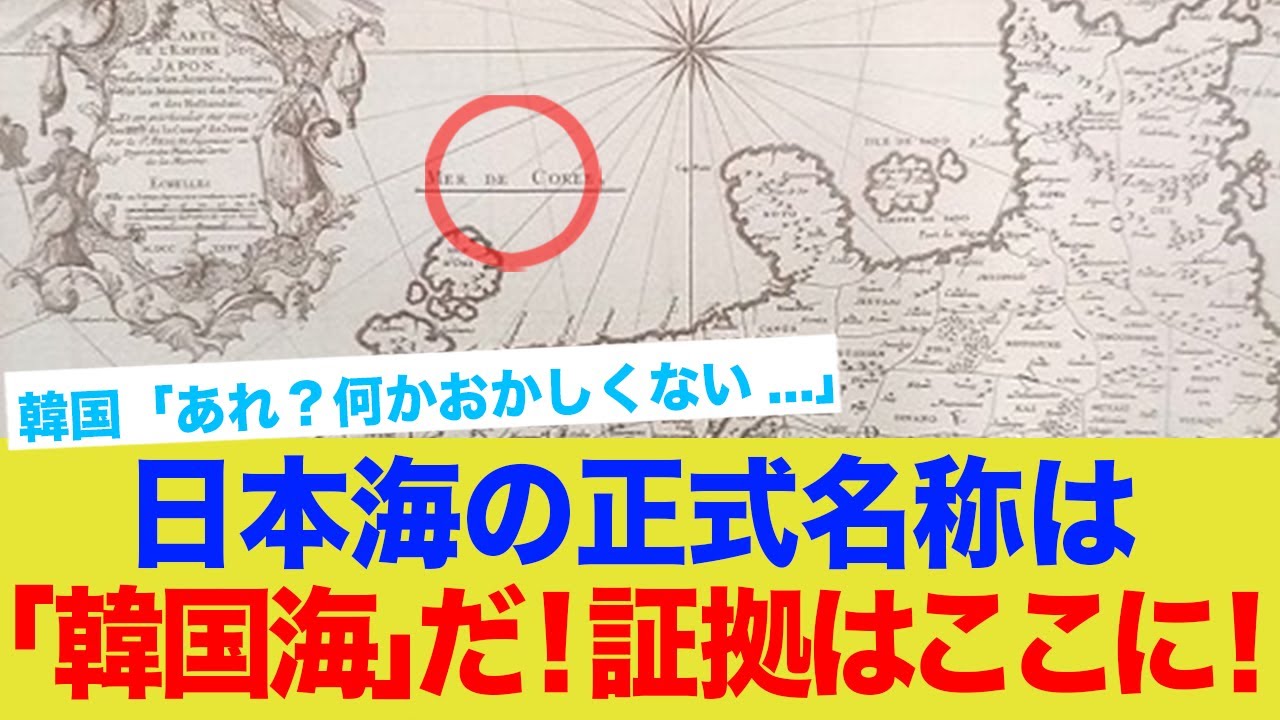
- Claim by South Korea that the Sea of Japan is the “Korean Sea” based on an 18th century map
- Repeated assertion by South Korea regarding the name of the sea
- Controversy over the naming of the body of water between Korea and Japan
- Historical perspectives and differing national claims on the nomenclature
- Ongoing dispute between the two countries over the appropriate designation of the sea

See Video for details.
The Cartographic Dispute: Korea’s Claim on the Sea of Japan
The Historical Perspective
Korea’s recent assertion that the Sea of Japan should be referred to as the “Korean Sea” based on an 18th-century map highlights the ongoing territorial disputes in the region. This longstanding cartographic debate underscores the complex geopolitical dynamics at play, as nations seek to assert their historical claims and influence over the region’s waterways.
Navigating Cartographic Narratives
The use of historical maps to support territorial claims is a common tactic employed by nations seeking to bolster their positions. However, the interpretation and significance of these maps can be subject to varying perspectives and interpretations, making the resolution of such disputes a challenging endeavor.
The Geopolitical Implications
Korea’s latest move to assert its claim over the Sea of Japan through the use of an 18th-century map is likely driven by a desire to assert its regional influence and challenge the established nomenclature. This action has the potential to further exacerbate tensions in the region, as other nations may respond with their own historical evidence and counter-claims.
The Cartographic Debate: Navigating Competing Narratives
The Role of Historical Maps
The use of historical maps in territorial disputes is a complex and often contentious issue, as nations seek to leverage their past to support their present-day claims. The interpretation and significance of these maps can vary widely, depending on the perspective and agenda of the parties involved.
Geopolitical Implications
Korea’s latest move to assert its claim over the Sea of Japan through the use of an 18th-century map is likely driven by a desire to assert its regional influence and challenge the established nomenclature. This action has the potential to further exacerbate tensions in the region, as other nations may respond with their own historical evidence and counter-claims.
The Ongoing Debate
The dispute over the name of the Sea of Japan is not a new phenomenon, and it is unlikely to be resolved in the near future. As nations continue to leverage historical evidence to support their territorial claims, the cartographic debate will likely persist, with significant geopolitical implications for the region.
Q&A: Korea Claims Japan Sea as Korean Sea in 18th Century Map
What is the title of the article?
The title of the article is “Korea claims the Sea of Japan as the Korean Sea using an 18th century map”.
What is the main claim made in the article?
The main claim made in the article is that Korea is asserting that the Sea of Japan should be called the Korean Sea, based on an 18th century map.
What is the reaction to Korea’s claim?
The reaction to Korea’s claim is indicated by the use of “又か” (again) in the title, suggesting that this is not the first time Korea has made this claim.
Video: Korea claims the Sea of Japan as the Korean Sea in an 18th century map www
Comments