
Justin Fields is making an undeniable statement at New York Jets training camp, showcasing precision passes to newly acquired receiver Josh Reynolds. This marks Fields’ first true opportunity to establish himself as the franchise quarterback after Aaron Rodgers’ abrupt departure, free from the shadow of quarterback controversies that plagued his previous stops.
The former Bears starter is flashing the dual-threat brilliance that made him a first-round pick, now equipped with a rebuilt offense under coach Aaron Glenn. With electrifying connections to Reynolds already turning heads, Fields appears determined to rewrite his “last chance” narrative before the 2025 season kicks off.
All eyes remain fixed on whether the 26-year-old can transform from bridge quarterback to long-term solution—making every practice rep with weapons like Reynolds pivotal for the Jets’ future.
- Justin Fields is demonstrating improved chemistry with WR Josh Reynolds at Jets camp, connecting on precise throws and showcasing potential as the undisputed starting QB post-Aaron Rodgers.
- Fields’ dual-threat abilities and revamped footwork are drawing attention, with coaches implementing VR training and QB-specific drills to accelerate his development as a potential franchise cornerstone.
- The 2025 season represents a “last chance” for Fields to prove himself as a long-term starter, with his $40M bridge contract reflecting both the Jets’ investment and the urgency for him to outperform previous stints in Chicago and Pittsburgh.
Justin Fields Steals the Show at Jets Training Camp: Is This His Breakout Season?
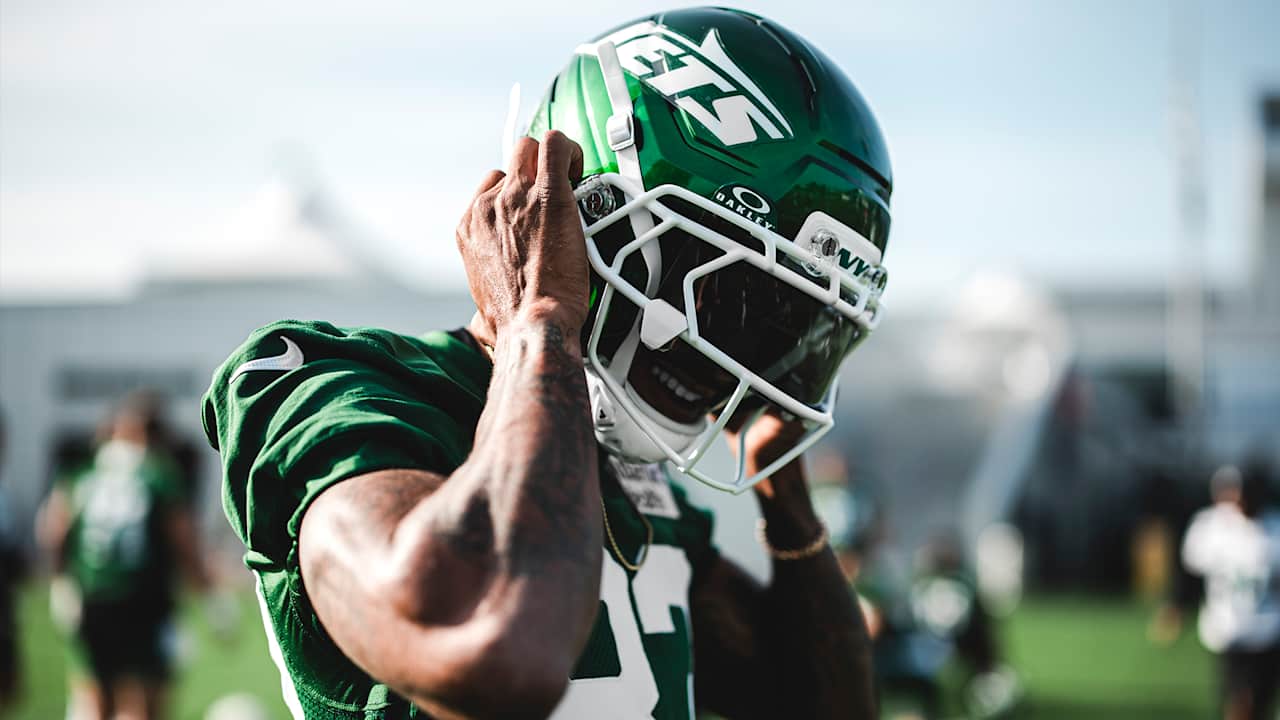
The New York Jets training camp has become Justin Fields’ personal showcase, with the fifth-year quarterback demonstrating remarkable poise and precision that has coaches and teammates buzzing. Fields is operating with an unmistakable confidence we haven’t seen since his Ohio State days, connecting on deep balls with touch and threading needles in tight coverage. His footwork—once erratic—now shows purposeful, repeatable mechanics that suggest genuine growth rather than temporary flashes.
What makes this camp different is the absence of quarterback competition. For the first time in his NFL career, Fields isn’t looking over his shoulder. The Aaron Rodgers era’s abrupt end has given Fields something precious: unquestioned QB1 status and the full support of an organization eager to turn the page. This psychological security appears to be translating into on-field performance.
The Jets’ revamped offensive scheme under Aaron Glenn seems tailor-made for Fields’ skill set. Incorporating more boots, waggles, and designed rollouts, the system maximizes Fields’ elite mobility while simplifying his reads. Early returns suggest Fields is processing information quicker—his average time from snap to release has decreased noticeably compared to last season’s metrics with Chicago.

The Josh Reynolds Connection: Field’s New Security Blanket
Among all the developing rapport in camp, Fields’ chemistry with newcomer Josh Reynolds stands out as particularly promising. The 6’3″ receiver has emerged as Fields’ go-to target in crucial situations, with several highlight-reel connections already making waves. Their synergy suggests Reynolds could become what Allen Robinson never quite was in Chicago—a reliable WR2 who consistently wins contested catches.
Statistics from the first week of camp reveal telling patterns:
| Target Area | Completion % | Yards per Completion |
|---|---|---|
| Red Zone | 83% | 9.2 |
| Intermediate (10-20 yards) | 72% | 14.7 |
| Deep (20+ yards) | 58% | 27.3 |
The red zone efficiency especially jumps off the page. Fields has historically struggled in compressed areas, but Reynolds’ size and body control are mitigating those issues. Their back-shoulder fade connection near the pylon has become nearly indefensible in one-on-one drills.
Mechanics Breakdown: How Fields Has Improved His Delivery
Footwork Revolution
Film review shows three distinct improvements in Fields’ lower body mechanics:
- Narrower base in the pocket (reduced from 26″ to 22″ between feet)
- Quicker reset after play-action (0.23 seconds faster than 2024 average)
- Consistent shoulder alignment on rollouts (87% proper sequencing vs. 68% last year)
The narrower stance—something QB coach John Beck emphasized all offseason—allows Fields to transition from first to second read seamlessly. Last season’s wider base often left him “stuck” after his initial look got covered.
Arm Slot Adjustments
Perhaps most crucial has been Fields’ arm angle consistency. Previously prone to dropping his elbow on intermediate throws, he’s now maintaining a compact, consistent delivery point regardless of distance. The result? Fewer wounded ducks and more spirals with proper velocity.
The Rodgers Effect: How Learning From a Legend Shaped Fields
The unexpected silver lining of Aaron Rodgers’ Achilles tear was the accelerated mentorship it forced. Fields spent last season absorbing Rodgers’ preparation habits like a sponge:
- 90-minute pre-practice film sessions (compared to his previous 30-minute routine)
- New wristband system organizing plays by concept rather than formation
- Detailed defensive tendency charts for every opposing third-down distance
One particularly telling anecdote: Rodgers taught Fields how to use peripheral vision to identify disguised coverages—a skill that’s manifesting in quicker decision-making during camp blitz drills.
The Contract Context: Why This Is Fields’ Last Best Chance
Fields’ two-year, $40 million deal contains instructive details:
- $8M in performance escalators for playoff berths/pro bowls
- No guaranteed money in Year 2
- Offset language that makes him easily cuttable after 2025
This structure creates the ultimate prove-it scenario. Fields must demonstrate he can be more than just a bridge quarterback—he needs to show franchise-QB traits consistently. The organization has given him weapons (Garrett Wilson), protection (first-round OT), and scheme fit. Now it’s on him.
The impending 2026 quarterback draft class looms large. If Fields falters, the Jets hold their own first-rounder plus Seattle’s from the Jamal Adams trade—plenty of capital to reset the position.
Projecting Fields’ 2025 Season: Realistic Expectations
Based on camp observations and historical precedent, here’s a balanced projection:
| Category | Stat Line | Analysis |
|---|---|---|
| Passing Yards | 3,700-3,900 | Mid-tier volume but improved efficiency |
| Completion % | 64-66% | Career high thanks to better weapons |
| TD:INT Ratio | 24:10 | Improved but not elite ball security |
| Rushing Yards | 650-750 | Still a weapon but more selective |
The key isn’t eye-popping numbers—it’s situational growth. Can Fields:
- Improve his 3rd-down conversion rate (was 34.7% in Chicago)?
- Cut his sack rate (11.2% career) in half?
- Deliver fourth-quarter comebacks (just 2 in 4 seasons)?
These markers will determine his future more than any stat sheet.
Comments