
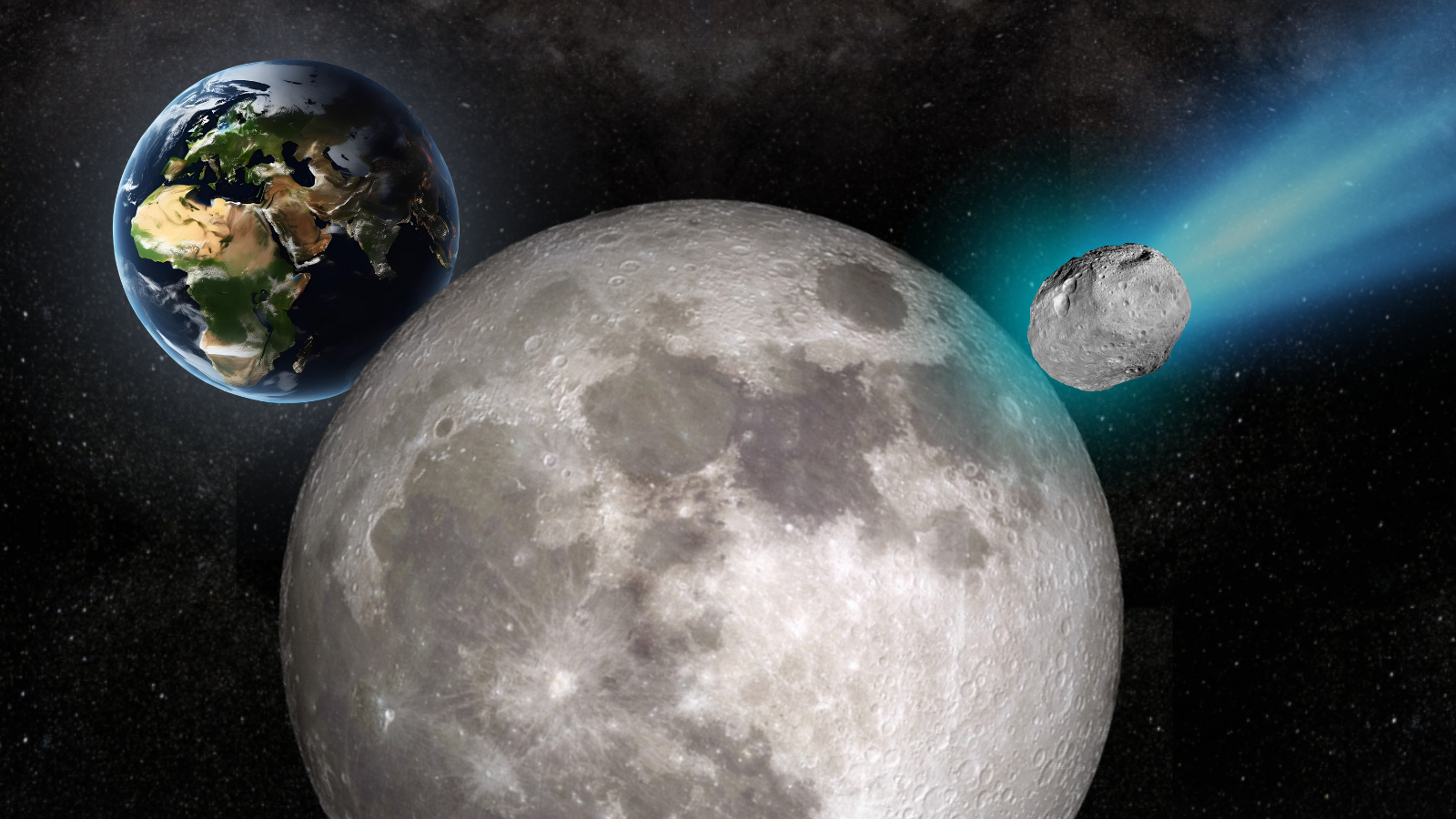
NASA has alerted astronomers worldwide about asteroid 2024 YR4, which now has a 4% chance of striking the Moon in December 2032. If the 200-foot asteroid impacts, it would unleash energy equal to 6 million tons of TNT, creating a kilometer-wide crater and potentially triggering a historic meteor shower.
While Earth faces no direct danger, scientists warn lunar debris could endanger satellites orbiting our planet. This rare event, the Moon’s largest potential impact in millennia, offers researchers an unprecedented opportunity to study cosmic collisions firsthand.
Space agencies are already developing contingency plans to protect critical orbital infrastructure from the bullet-like debris predicted to follow such an impact.
- Asteroid 2024 YR4 has a 4% chance to collide with the Moon in 2032, potentially unleashing energy equivalent to 6 million tons of TNT and creating a 1-km-wide crater.
- The impact could eject “bullet-like” lunar debris toward Earth, triggering a historic meteor shower and posing risks to satellites, though direct danger to our planet is minimal.
- NASA is developing contingency plans to protect orbital infrastructure, including satellite shielding maneuvers and emergency procedures for the ISS.
- The February 2025 observation window will provide critical data to refine impact predictions through radar imaging of the asteroid’s shape and rotation.
NASA Warns: Asteroid 2024 YR4’s 4% Chance to Hit the Moon in 2032 Could Trigger Historic Meteor Shower and Satellite Threats
The 4% Lunar Impact: Understanding the Odds
NASA’s Planetary Defense Coordination Office has calculated a 4% probability that asteroid 2024 YR4 will collide with the Moon in December 2032. While this percentage might appear small at first glance, in astronomical terms, it represents a significantly high risk factor. To put this into perspective, these odds are equivalent to rolling a specific number on a 25-sided die – unlikely, but far from impossible.
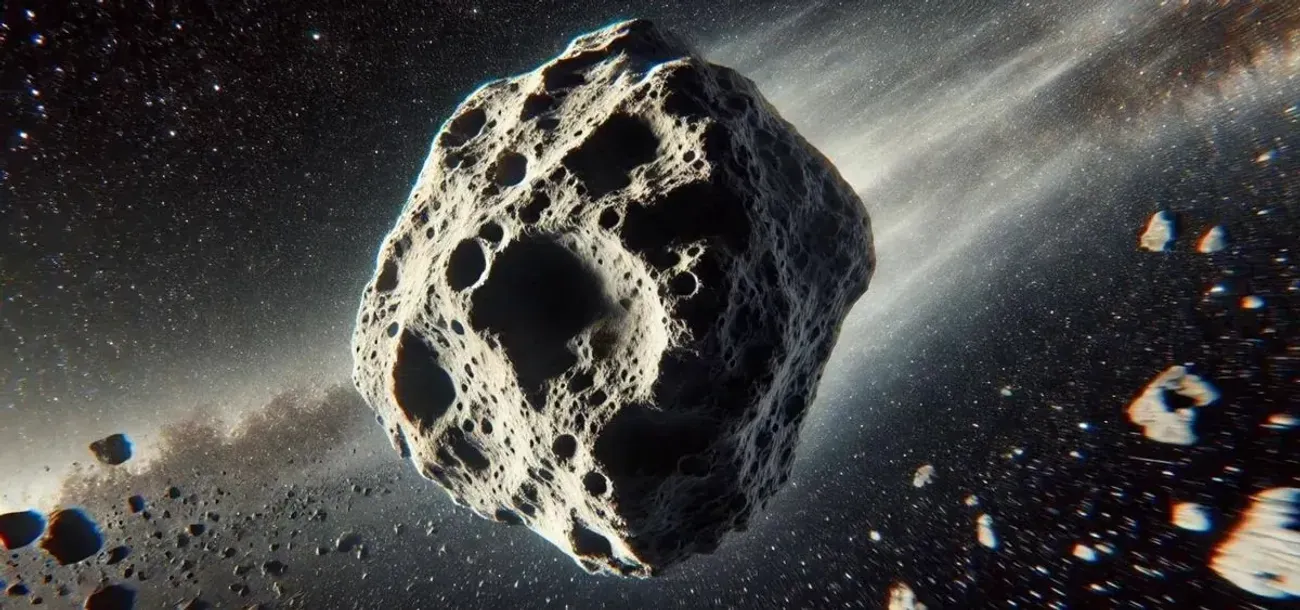
The asteroid, measuring approximately 200 feet (60 meters) in diameter, carries frightening potential energy. Should impact occur, the explosion would release energy comparable to 6 million tons of TNT, creating a crater nearly one kilometer wide and ejecting lunar material at several kilometers per second. This event would rank as the most significant lunar impact in approximately 5,000 years.

Meteor Shower of Epic Proportions: The Earthbound Consequences
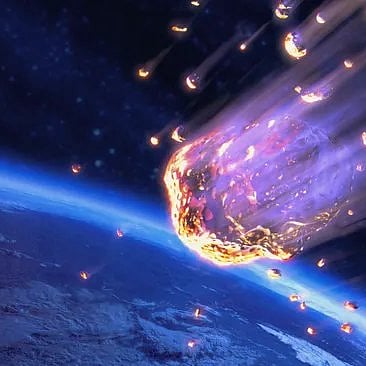
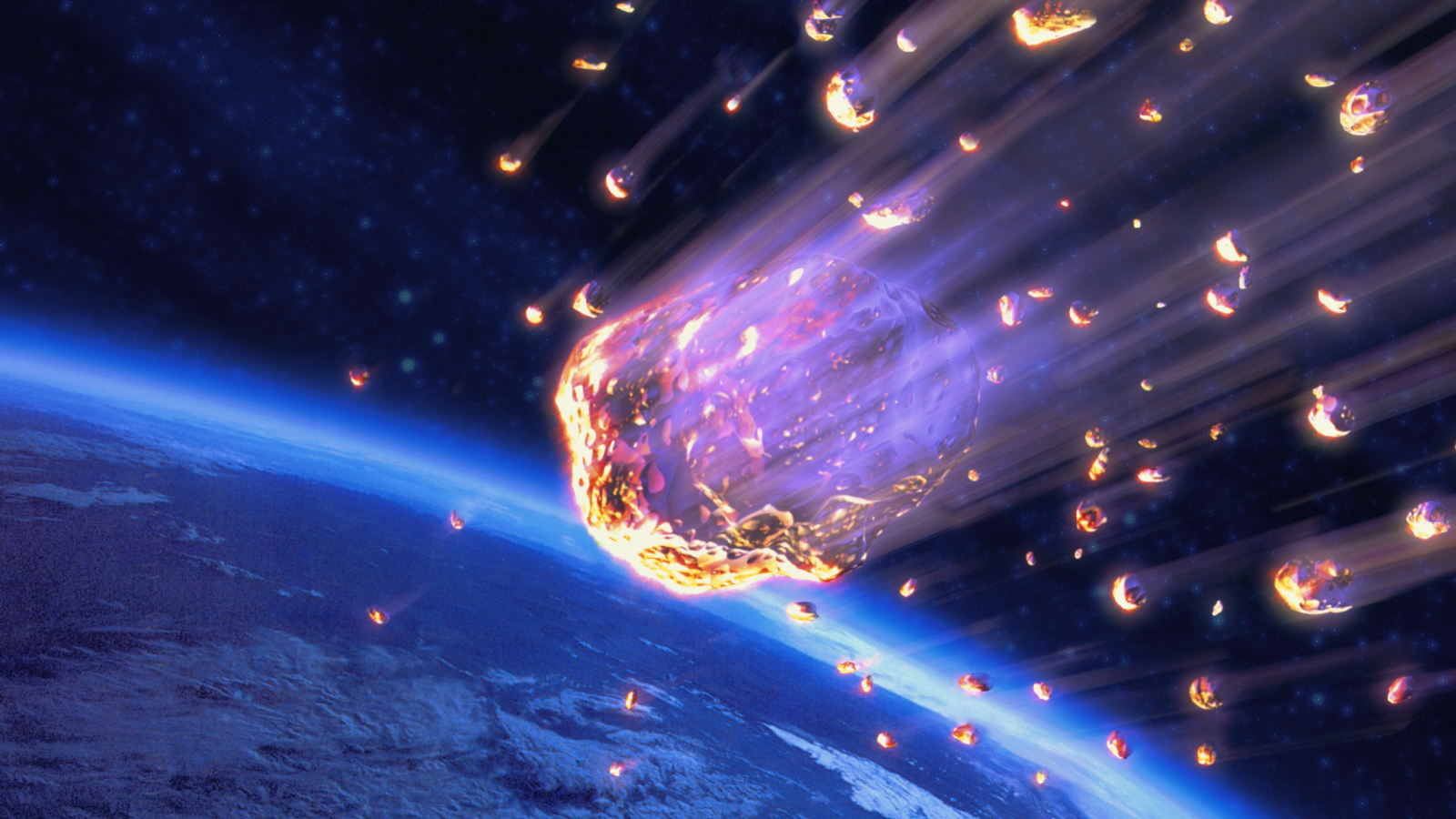
While Earth faces no direct threat from the asteroid itself, scientists warn that the lunar impact could create secondary hazards. Computer simulations suggest the collision might eject up to 100 million kilograms of lunar dust and rock fragments into space. Some of this material will inevitably follow trajectories intersecting Earth’s atmosphere.
The resulting meteor shower could be visible to the naked eye across the globe, with particles entering our atmosphere at extraordinary velocities – potentially faster than typical meteors. This high speed has led astronomers to describe the potential debris as “bullet-like.” The spectacle might rival historic meteor storms like the famous Leonids, but comes with genuine risks:
- Satellite damage: High-velocity particles could damage or destroy sensitive satellite equipment
- Space operations disruption: ISS and other spacecraft might need protective measures
- Navigation interference: GPS systems in higher orbits face particular vulnerability
NASA’s Emergency Satellite Protection Strategy
Space agencies worldwide are developing comprehensive contingency plans to safeguard critical orbital infrastructure. These protective measures represent an unprecedented coordination effort in planetary defense and demonstrate how seriously the scientific community takes even relatively low-probability threats.
The proposed protection protocols include:
| Measure | Implementation | Protected Assets |
|---|---|---|
| Satellite reorientation | Adjusting position to minimize exposed surfaces | All orbital satellites |
| Safe mode activation | Special protective operating states | Scientific and communication satellites |
| Temporary shutdown | Powering down sensitive instruments | High-value equipment |
The International Space Station would implement special shielding procedures, though NASA assures that crew risk remains minimal. More vulnerable are the numerous communication and GPS satellites in higher orbits that form the backbone of modern global infrastructure.
The Critical February 2025 Observation Window
All current predictions hinge on incomplete data that will be substantially refined during the asteroid’s next close approach in February 2025. This observation opportunity allows for radar imaging that can reveal the asteroid’s exact shape, rotation, and composition – factors that significantly affect impact predictions and potential debris patterns.
Historical Perspective: When the Moon Takes a Hit
The Moon constantly experiences small impacts from space debris, but an event of this magnitude would be unprecedented in recorded human history. Based on lunar crater dating studies, the last comparable impact likely occurred around 3,000 BCE – before the construction of the Egyptian pyramids.
For context, the famous 2013 Chelyabinsk meteor that exploded over Russia released about 500 kilotons of energy. The 2024 YR4 potential impact would dwarf that event by a factor of twelve. However, the lunar impact would differ fundamentally from terrestrial meteor events in several ways:
- No atmospheric cushioning means more concentrated energy release
- The Moon’s lower gravity allows easier debris escape
- No weather systems to disperse the dust cloud
A Spectacle for Amateur Astronomers
Should impact occur, amateur astronomers with moderate telescopes will have a front-row seat to this historic cosmic event. The actual impact flash could last several seconds, while the resulting dust cloud might remain visible for hours or even days as it slowly dissipates across the lunar surface.
The Future of Lunar Exploration: Impacts on Off-World Infrastructure
While no permanent lunar bases currently exist, planned installations through NASA’s Artemis program and commercial ventures must now consider this new risk factor in their designs. A 1-kilometer crater could wreak havoc on surface installations and dramatically alter local geology, presenting both challenges and opportunities for lunar settlers.
Engineering teams are already developing enhanced protections for future lunar habitats:
- Multilayer shielding for surface structures
- Underground construction concepts leveraging lunar lava tubes
- Advanced warning systems for meteoroid impacts
- Emergency shelter protocols for lunar inhabitants
Private space companies like SpaceX and Blue Origin are monitoring the situation closely, though none have publicly announced specific protective measures. The incident highlights the growing need for comprehensive asteroid early warning systems to protect humanity’s expanding off-world infrastructure.

The Bigger Picture: Planetary Defense Implications
Regardless of whether 2024 YR4 ultimately impacts the Moon, this event serves as a sobering reminder of our solar system’s dynamic nature. The asteroid’s orbit brings it dangerously close to Earth every few years, and future gravitational interactions could alter its path to pose different threats.
This situation underscores the critical importance of continued planetary defense monitoring and the urgent need to develop effective asteroid deflection technologies. Several key takeaways emerge from the 2024 YR4 scenario:
- Impact predictions can change dramatically with new data
- Secondary effects (like lunar debris) require consideration
- Space infrastructure vulnerability remains a pressing concern
- International cooperation is essential for planetary defense
Comments