
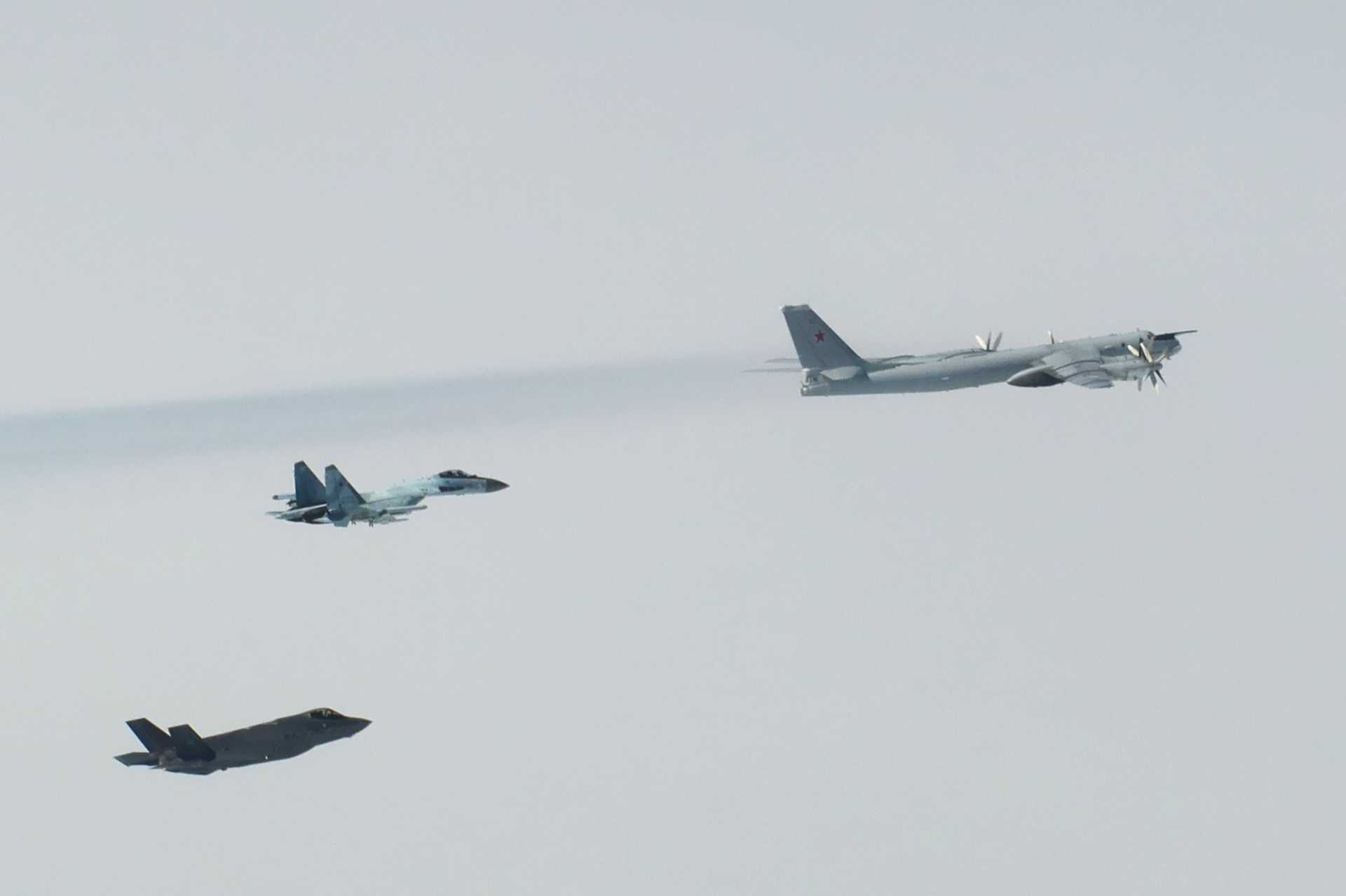
Russian military aircraft were once again intercepted near Alaska by NORAD fighter jets, continuing a longstanding pattern of aerial encounters between U.S. and Russian forces. The incident involved strategic bombers and fighter jets operating in international airspace, mirroring Cold War-era posturing.
NORAD confirms such interceptions occur regularly and aren’t inherently threatening, though they highlight lingering tensions between nuclear powers. While alarming to civilians, defense experts emphasize these are scripted operations following established protocols to prevent accidental escalation.
The recent incident comes amid heightened NATO-Russia tensions, with Moscow testing response times while Washington demonstrates its Arctic defense capabilities. Alaska remains North America’s frontline for aerospace defense, just 55 miles from Russian territory.
- NORAD regularly intercepts Russian military aircraft, including Tu-95 bombers and Su-35 fighters, near Alaska’s Air Defense Identification Zone (ADIZ), with over 60 incidents since 2007.
- These intercepts follow established protocols, with no airspace violations, and serve as strategic posturing by Russia while testing NORAD’s response capabilities.
- Alaska’s geographic proximity to Russia (55 miles at Bering Strait) makes it a critical frontline for U.S. Arctic defense, hosting enhanced radar systems and military units.
- While evocative of Cold War tensions, experts emphasize these operations are routine and unlikely to escalate into conflict due to maintained communication channels.
Russian Jets Near Alaska: How Often Does NORAD Intercept Them?
NORAD (North American Aerospace Defense Command) has intercepted Russian military aircraft near Alaska’s Air Defense Identification Zone (ADIZ) over 60 times since 2007, with increasing frequency since 2020. These encounters typically involve Tu-95 “Bear” bombers and Su-35 fighter jets operating in international airspace. While alarming to civilians, military officials emphasize these are routine training missions that follow established protocols.

Recent data shows:
- September 2024: Four intercepts within five days
- July 2025: Tu-95 escorted by Su-35s met by F-35s
- April 2025: Six Russian jets tracked near Western Aleutians

Why Russia Tests Alaska’s Defenses
Analysts identify three strategic reasons for these flights:
- Evaluating NORAD response times and capabilities
- Demonstrating Russia’s Arctic operational reach
- Sending political messages during NATO tensions
What Aircraft Does Russia Deploy Near Alaska?
The Russian Aerospace Forces primarily use these aircraft for Arctic patrols:
| Aircraft | Role | Range |
|---|---|---|
| Tupolev Tu-95 | Nuclear-capable bomber | 9,400 miles |
| Sukhoi Su-35 | Multirole fighter | 2,200 miles |
| Tupolev Tu-160 | Supersonic bomber | 7,600 miles |
NORAD’s Interception Protocol Explained
When Russian aircraft enter Alaska’s ADIZ, NORAD executes a four-stage response:
Detection Phase
- Satellite tracking identifies approaching aircraft
- Ground-based radars confirm trajectory
- E-3 Sentry AWACS planes provide additional monitoring
Interception Phase
- F-22 Raptors or F-35 Lightning IIs scramble from Joint Base Elmendorf-Richardson
- Interceptors establish visual contact
- Russian aircraft are escorted until exiting ADIZ

Why Alaska Is Critical for U.S. National Defense
Alaska’s geographic position creates unique strategic advantages:
- Only 55 miles from Russia at Bering Strait
- Situated along great circle flight paths between continents
- Hosts critical early warning radar systems
Recent military enhancements include:
- Deployment of the 11th Airborne Division (“Arctic Angels”)
- Expansion of Clear Space Force Station monitoring capabilities
- Increased joint exercises with Canadian NORAD forces

Historical Context: From Cold War to Modern Tensions
Current Russian patrols mirror Soviet operations during the Cold War:
| Era | Russian Aircraft | U.S. Interceptors |
|---|---|---|
| 1950s-60s | Tu-95 “Bear” | F-102 Delta Dagger |
| 1980s | Tu-95 Bear-H | F-15 Eagle |
| 2020s | Tu-95MS + Su-35 | F-22 Raptor |
Why These Intercepts Don’t Lead to World War 3
Despite dramatic headlines, experts agree these incidents pose minimal escalation risk because:
- All flights remain in international airspace
- Both nations maintain military communication channels
- Standard intercept procedures prevent misunderstandings
Russia’s likely objectives include:
- Testing NATO response capabilities
- Demonstrating military readiness to domestic audiences
- Maintaining Arctic operational experience
Comments