
The dazzling aurora borealis is set to illuminate skies again in 2025, with scientists predicting increased solar activity during the solar maximum. This natural light show may reach unprecedented southern latitudes, potentially visible from unexpected locations across North America.
The upcoming solar cycle peak offers a rare opportunity to witness vibrant auroral displays without traveling to polar regions. Recent events have already demonstrated these breathtaking phenomena can appear as far south as Florida and Texas.
Our 2025 forecast reveals the best times and locations to experience nature’s most spectacular light show. Whether you’re a seasoned aurora chaser or first-time viewer, this guide will help you prepare for the celestial spectacle ahead.
- A powerful G4-class geomagnetic storm in November 2025 made the aurora borealis visible as far south as Florida, with rare sightings reported in Texas and Arizona.
- The next significant aurora event could occur within 2-3 weeks, as solar activity remains high during the peak of the current solar cycle (expected to last through mid-2026).
- During extreme solar storms, auroras can be photographed with smartphones using night mode, tripods, and manual settings (3-10 sec exposure, ISO 800-1600).
- Increased solar activity poses risks like power grid fluctuations and GPS disruptions, though the November 2025 storms caused only minor radio blackouts.
- Current space weather forecasts are reliable for only 2-3 days, as predicting exact CME timing and intensity remains challenging.
When and Where to See the Aurora Borealis Next: Latest Northern Lights Forecast for 2025
2025 Aurora Borealis Outlook: Solar Maximum Brings Spectacular Displays
The aurora borealis, or northern lights, have been putting on extraordinary shows across North America in 2025, reaching unprecedented southern latitudes. This surge in activity results from our current position in Solar Cycle 25’s maximum phase, expected to peak through mid-2026. The November 11-12, 2025 geomagnetic storm produced G4-class conditions, making auroras visible from Colorado to Florida – a phenomenon rarely observed outside polar regions.
Several factors contribute to this increased visibility:
- Heightened sunspot activity releasing more coronal mass ejections (CMEs)
- Optimal alignment between Earth’s magnetic field and solar wind particles
- Improved public awareness and smartphone photography capabilities
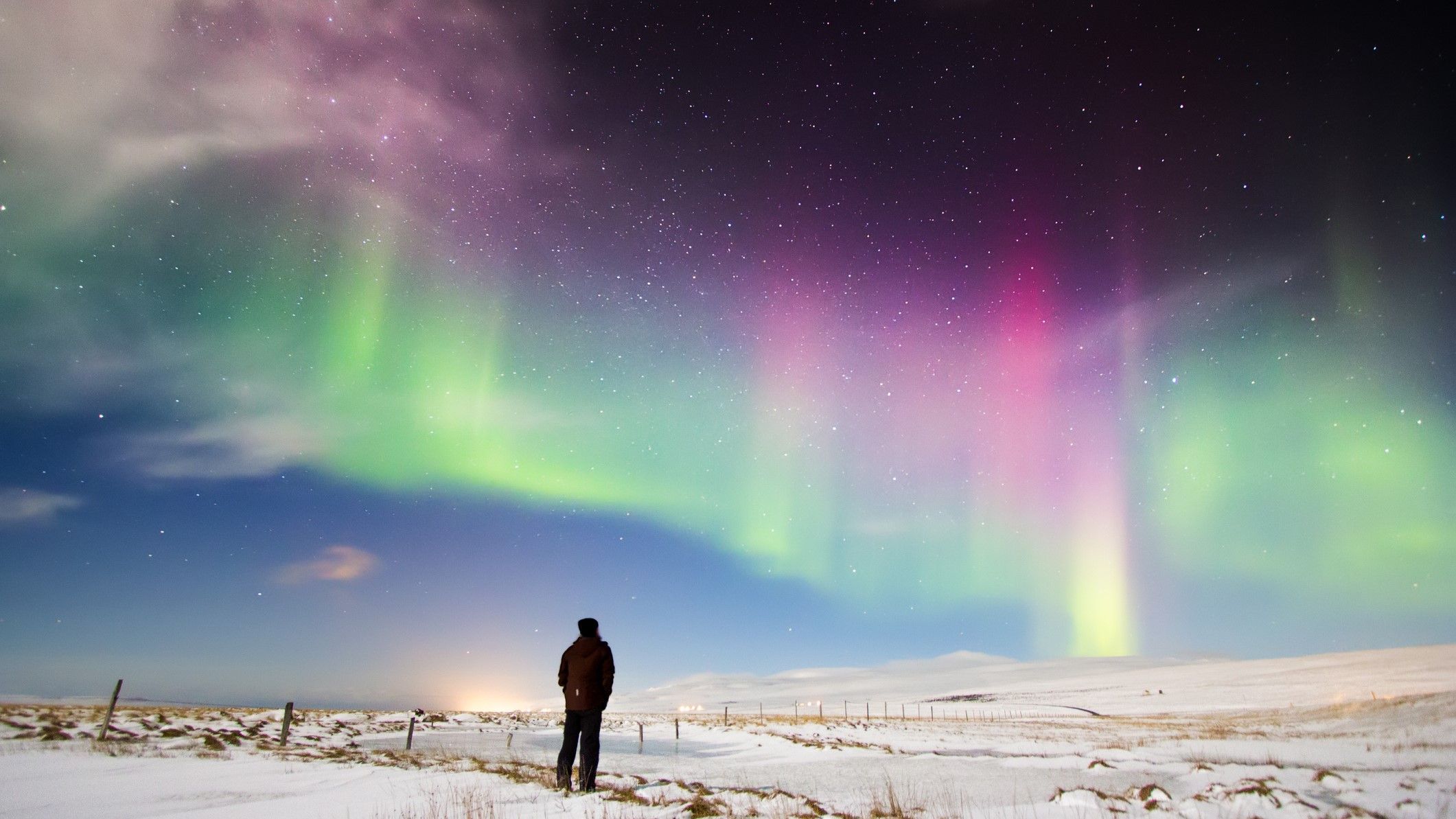

Best Viewing Times and Locations for 2025 Northern Lights
For those hoping to catch the next aurora display, timing and location are crucial. Based on solar activity patterns and historical data, here are the optimal viewing parameters:
Prime Viewing Windows
| Timeframe | Recommendation |
|---|---|
| Daily | 10 PM – 2 AM local time |
| Seasonal | September through March |
| Solar Cycle | 2024-2026 (Solar Maximum) |
For U.S. observers during strong geomagnetic storms (G3 or higher), these latitude ranges typically offer visibility:
- G3 Storm: Northern states (45°N and above)
- G4 Storm: Mid-latitudes (35°N and above)
- G5 Storm: Southern states (25°N and above)
How Solar Activity Creates the Aurora Phenomenon
The northern lights result from intricate interactions between our planet and the sun. When the sun releases massive bursts of solar wind and magnetic fields (CMEs), Earth’s magnetosphere deflects most particles. However, some penetrate the magnetic shield, channeling toward the poles along field lines.
This process follows several critical steps:
- Sunspot groups release CMEs containing charged particles
- Particles travel through space (1-3 days typically)
- Earth’s magnetosphere guides particles to polar regions
- Particles collide with atmospheric gases, emitting light

Photographing the Northern Lights: Expert Techniques
Capturing the aurora borealis requires specialized techniques whether using professional equipment or smartphones. Modern cameras can produce stunning results with proper settings and preparation.
Smartphone Photography Tips
- Use night mode or manual/pro mode if available
- Set ISO between 800-1600 (higher increases noise)
- Adjust exposure to 3-10 seconds
- Stabilize with tripods or makeshift supports
DSLR Camera Settings
| Setting | Recommended Value |
|---|---|
| Aperture | f/2.8 or wider |
| Shutter Speed | 5-25 seconds |
| ISO | 800-3200 |
| Focus | Manual infinity (adjust slightly back) |
Historic Aurora Events and Future Predictions
Comparing the 2025 events to historic solar storms provides context about their rarity and potential impacts:
| Event | Year | Southernmost Visibility |
|---|---|---|
| Carrington Event | 1859 | Caribbean (18°N) |
| Quebec Blackout | 1989 | Texas (30°N) |
| Halloween Storms | 2003 | Mediterranean (35°N) |
| 2025 Solar Maximum | 2025 | Florida (25°N) |
Looking ahead, solar physicists anticipate:
- Continued strong activity through late 2026
- Approximately 27-day cycles as sunspot regions rotate
- Potential for G4-G5 storms every 2-3 months

Aurora Safety: Balancing Wonder and Caution
While auroras pose no direct health risk, their associated geomagnetic storms can impact technology and infrastructure. The November 2025 events demonstrated several effects:
- Radio blackouts affecting emergency communications
- GPS accuracy degraded by 50-100 meters
- Power grid fluctuations requiring operator intervention
Space weather monitoring has improved dramatically since the 1989 Quebec blackout. Modern mitigation strategies include:
- Satellite early warning systems
- Grid stabilization protocols
- Air traffic rerouting during severe storms
Comments