
Apple CEO Tim Cook and former President Donald Trump unveiled a $100 billion U.S. investment plan at the White House, aiming to bolster domestic manufacturing amid escalating trade tensions. The announcement follows Trump’s threats of new iPhone tariffs, raising questions about whether this deal secures exemptions.
While the move aligns with Apple’s earlier $500 billion U.S. commitment, analysts suspect it may be a strategic play to mitigate potential tariff impacts. Apple’s stock surged ahead of the event, reflecting investor optimism about the company’s balancing act between political pressures and global supply chains.
- Apple announces a $100 billion U.S. investment deal with former President Trump amid escalating trade tensions, aiming to potentially avoid iPhone tariffs in 2025.
- The investment focuses on domestic manufacturing and R&D, including AI server factories and chip production, but critics argue it may only involve final assembly rather than full-scale manufacturing.
- Apple’s stock rose 3% ahead of the announcement, reflecting investor optimism that the deal could mitigate the financial impact of Trump’s proposed 15% tariffs on consumer electronics.
Apple’s $100 Billion US Investment Deal with Trump: Will It Prevent iPhone Tariffs in 2025? | AAPL News

Apple’s Strategic $100B Investment: Tariff Protection or Genuine US Commitment?
Apple’s surprise $100 billion US investment announcement alongside former President Trump raises critical questions about corporate strategy in turbulent trade times. The tech giant’s CEO Tim Cook emphasized domestic job creation during the White House event, framing the move as part of Apple’s broader $500 billion US investment plan. However, analysts note this conveniently follows Trump’s renewed tariff threats targeting Chinese-made electronics.
This pattern mirrors Apple’s 2019 tactics when it shifted Mac Pro production to Texas after similar tariff pressures, suggesting tactical adaptation rather than fundamental supply chain restructuring. While promising 15,000 new US jobs, this represents less than 1% of Apple’s global workforce, leaving its China-dependent manufacturing model largely intact.
The investment breakdown reveals prioritization of final assembly over full manufacturing:
- $40B for Arizona iPhone assembly facilities
- $35B for Texas AI server production
- $25B distributed across R&D centers

iPhone Production Realities: Why Arizona Facilities Won’t Mean “Made in USA”
Apple’s announced Arizona operations will focus on iPhone 16E final assembly rather than complete manufacturing. Insiders confirm critical components like A18 chips and Apple C1 modems will continue being produced overseas, maintaining dependence on Asian semiconductor ecosystems.
This “assembly loophole” allows:
- Imported near-finished components
- Limited US value-added steps
- “Made in USA” qualification
The strategy parallels Apple’s Mac Pro approach – minimal domestic transformation maximizing political benefits. Technical limitations persist with US semiconductor production capacity unable to match Asian foundries’ scale and efficiency.
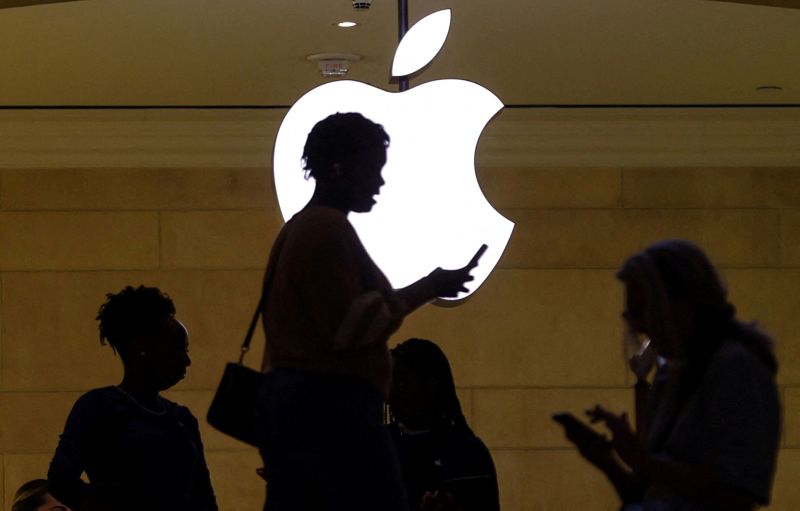
Tariff Chess: How Trump’s Trade Policies Forced Apple’s Hand
The Trump administration’s escalating trade measures created urgent calculus for Apple:
| Policy | Impact | Apple Response |
|---|---|---|
| 15% consumer electronics tariff | Potential $150 price increase per iPhone | Domestic production pledges |
| China import restrictions | Supply chain disruption | Diversified assembly locations |
Market Reactions: Why AAPL Shares Rose 3% Pre-Announcement
Apple’s stock (AAPL) gained significantly ahead of the White House event, reflecting investor confidence in Cook’s political navigation. Market analysts attribute this to:
- Perceived tariff risk mitigation
- Maintained China profit structures
- Strategic positioning for 2025 policies
The market apparently accepted Apple’s ability to balance contradictory demands – appearing responsive to US manufacturing priorities while preserving its globalized operations model. However, long-term sustainability questions remain about such tightrope strategies in increasingly polarized trade environments.
The Political Theater: Truth Social Leaks and Coordinated Messaging
Trump’s deleted Truth Social post hinting at “big Apple news” suggests carefully choreographed communications. The pattern reflects:
- Corporate concessions packaged as administration wins
- Job announcements timed to political cycles
- “America First” narrative reinforcement
The deleted post indicates awareness of perception management, typical in corporate-political partnerships where economic realities contradict public messaging. Apple walks this line skillfully, securing policy concessions while minimizing operational disruptions.
Industry Domino Effect: Will Tech Giants Follow Apple’s Lead?
Apple’s move appears part of broader tech sector adaptation toTrump’s second-term policies:
| Company | Announced US Investment | Focus Area |
|---|---|---|
| NVIDIA | $500B | AI infrastructure |
| TSMC | $100B | Chip plants |
| IBM | $30B | Quantum computing |
This creates competitive dynamics where companies negotiate individual tariff arrangements through high-profile job pledges. The trend suggests temporary accommodations rather than fundamental industry restructuring.
Long-Term Realities: Temporary Truce or Lasting Transformation?
While politically expedient for both Apple and the administration, several factors indicate limited long-term impact:
- Most components still imported
- Small percentage of total workforce
- Replicability challenges economy-wide
The investment ultimately represents intelligent crisis management – preserving Apple’s profitable status quo while appearing responsive to political winds. As trade tensions continue evolving, such strategies may require reassessment when temporary measures prove insufficient against structural pressures.
Comments