
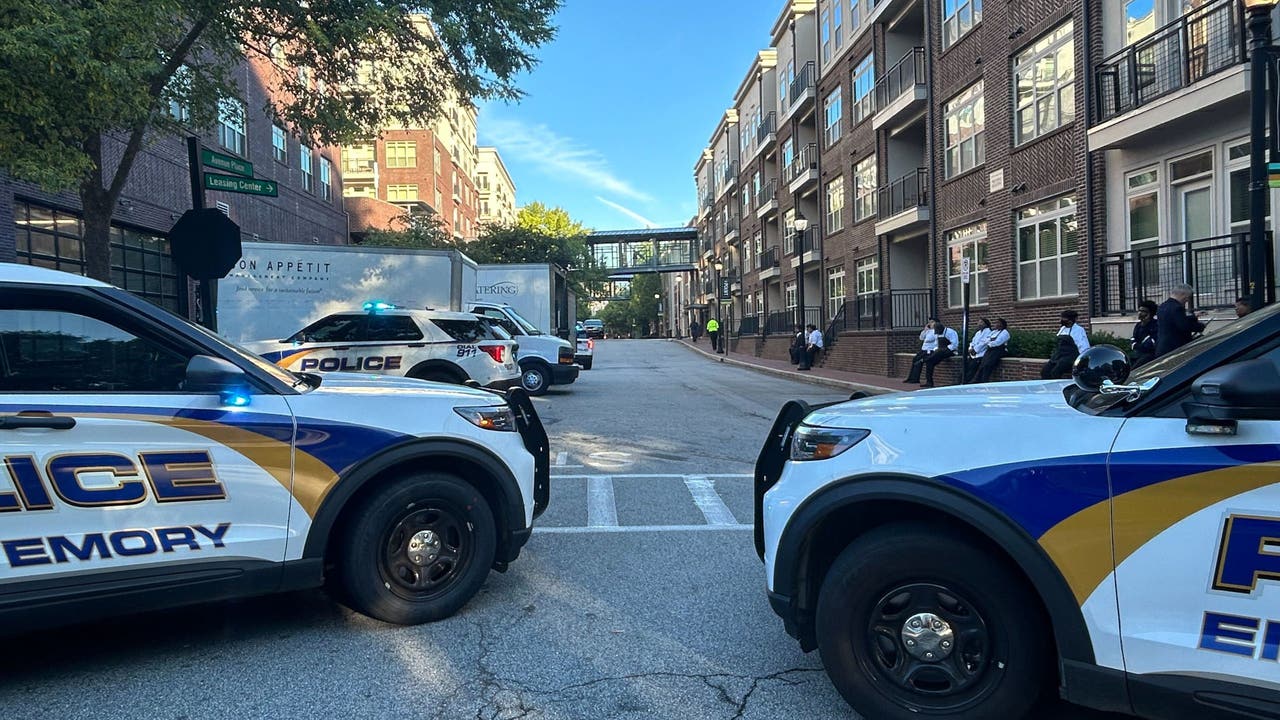
Gunfire erupted at Emory University’s Atlanta campus Thursday morning, prompting immediate lockdowns and emergency alerts. The suspected shooter, involved in a violent catering dispute at Emory Point, fled the scene but was later apprehended by police. No injuries were reported despite the chaos that disrupted campus activities.
Authorities issued an “ALL CLEAR” after securing the area, though investigations continue as safety protocols face scrutiny. This marks the second firearms-related incident at Emory in recent months, raising questions about campus security measures for third-party vendors and conflict resolution procedures.
- Gunfire erupted at Emory University’s Atlanta campus following a catering dispute, with the suspect fleeing but later apprehended by police—no injuries were reported.
- The university issued an “ALL CLEAR” after lockdown protocols, though authorities confirmed the shooter is banned from campus as investigations continue.
- This marks the second firearms-related incident at Emory in recent months, prompting reviews of safety protocols and vendor screening processes.
Emory University Shooting: Updates on Arrested Suspect, Safety Protocols, and Campus Response
Timeline of the Emory University Shooting Incident
On the morning of September 19, 2024, gunfire erupted at Emory University’s Atlanta campus near Emory Point, sparking panic across the academic community. The incident began at approximately 11:52 AM when an altercation between catering workers escalated into violence. According to eyewitness accounts, the suspect fired multiple shots before fleeing the scene.
University police issued an emergency alert within 23 minutes, initiating a full campus lockdown under the “RUN. HIDE. FIGHT.” protocol. Classrooms automatically locked down as students and faculty received text alerts instructing them to shelter in place. Police established a perimeter while tracking the suspect through surveillance footage.
Key moments in the response:
- 11:52 AM: First shots reported near Emory Point food court
- 12:15 PM: University-wide emergency alert activated
- 2:30 PM: Suspect spotted near Clifton Corridor
- 4:45 PM: Arrest made without further incident

Profile of the Arrested Suspect and Investigation Details
Atlanta police apprehended the suspected shooter, identified as a 34-year-old food service contractor, several hours after the incident. Authorities confirmed the individual had been involved in a workplace dispute with another catering employee before producing a firearm. Notably, the suspect had no prior affiliation with Emory University beyond temporary contract work.
Charges filed include:
| Charge | Classification |
|---|---|
| Aggravated assault | Felony |
| Possession of firearm on school property | Felony |
| Reckless endangerment | Misdemeanor |
Investigators recovered a semi-automatic handgun believed to be the weapon used in the incident. Court records reveal the suspect had two prior misdemeanor convictions unrelated to violence.
Emory’s Emergency Response Evaluation
While university officials praised the eventual containment of the situation, multiple students reported confusion during the lockdown. Some received conflicting information about whether the threat was contained to Emory Point or had spread to academic buildings. The school’s emergency notification system delivered alerts through:
- Text messages
- University email
- Desktop pop-ups on campus computers
- Social media updates
However, several students reported significant delays in receiving notifications. Computer science major Rachel Tran described the experience: “I heard screams from the courtyard before any alert came through. By the time we got the text, people were already barricading doors.”
Campus Security Enhancements Post-Incident
Emory University has announced a $3 million security upgrade package following the shooting. Key components include:
Physical Security Improvements
The university will install 78 additional surveillance cameras with real-time analytics capabilities by January 2025. These cameras will integrate with an AI system designed to detect weapons based on shape recognition technology.
Policy Changes
Starting October 2024, all third-party contractors must undergo:
- Enhanced background checks
- Mandatory de-escalation training
- Security awareness orientation
Community Preparedness
The university will implement quarterly active shooter drills for all faculty and staff, expanding beyond the current annual requirement. New “safe room” locations are being identified across campus, equipped with reinforced doors and emergency communication devices.
Comparative Analysis of Campus Shootings in Georgia
The Emory incident marks the fourth firearms-related emergency at Georgia educational institutions in 2024 alone. Data suggests concerning patterns:
| Institution | Date | Casualties | Response Time |
|---|---|---|---|
| Apalachee High School | April 2024 | 3 injured | 9 minutes |
| Georgia Tech | February 2024 | 1 fatality | 14 minutes |
| Emory University | September 2024 | None | 23 minutes |
This pattern has prompted state legislators to revisit the Campus Safety Enhancement Act passed in June 2024, which currently mandates:
- One armed officer per 1,000 students
- Annual threat assessment training
- Anonymous reporting systems
Psychological Impact on Campus Community
While no physical injuries occurred, university counselors report a significant uptick in appointments following the incident. Many students exhibited symptoms of acute stress, including:
- Hypervigilance
- Sleep disturbances
- Difficulty concentrating
The university has extended counseling center hours and implemented group therapy sessions specifically addressing trauma related to the shooting. Studies show that prompt mental health intervention can reduce long-term PTSD symptoms by up to 40% in such situations.
Graduate student Marcus Williams shared: “The shooting changed how I move through campus. I now constantly scan for exits and avoid crowded spaces. It’s exhausting feeling unsafe where you’re supposed to learn.”
Comments