
Two men have been sentenced to over four years in prison for illegally cutting down the iconic Sycamore Gap tree near Hadrian’s Wall, a crime that sparked national outrage in the UK.
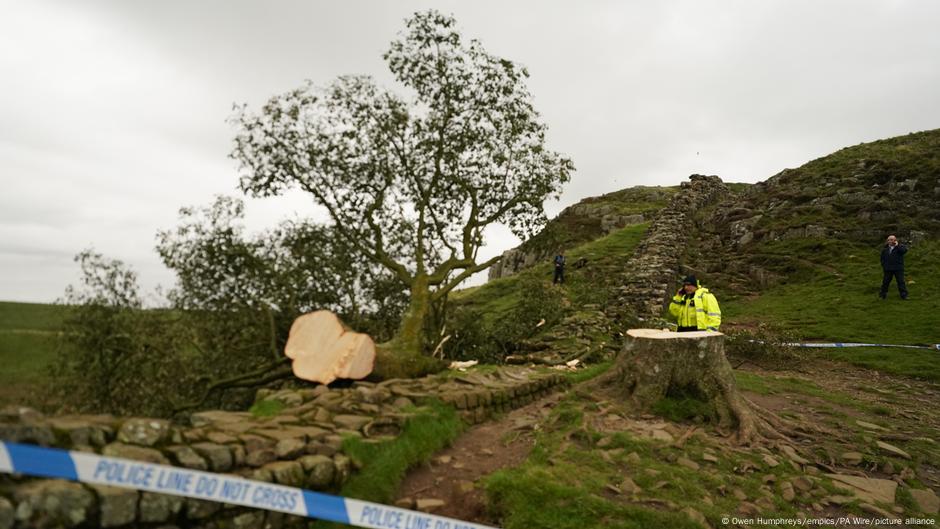
The 200-year-old tree, featured in films and crowned England’s Tree of the Year in 2016, was destroyed in a “senseless act”, leaving its stump’s future uncertain. While preserved sections now display at a nearby discovery center, the case has reignited debates about protecting natural landmarks.
Judge Nigel Gosnell called the vandalism “mindless thuggery,” highlighting the tree’s cultural value beyond its physical loss. The sentencing sets a precedent for heritage crime penalties in Britain.
- Two vandals received over four years in prison for the deliberate felling of England’s iconic Sycamore Gap tree, which stood near Hadrian’s Wall for over 200 years.
- The tree’s stump is being preserved while experts debate whether to allow natural regrowth or create a memorial, with portions already displayed at The Sill National Landscape Discovery Center.
- The case has sparked increased security measures for historic trees across the UK, including 24/7 monitoring systems for vulnerable landmarks like Sherwood Forest’s Major Oak.
Sycamore Gap Tree Vandals Sentenced: 4+ Years in Prison and the Future of the Stump Explained

Historic Sentencing for Iconic Tree Destruction
In a landmark environmental case, Daniel Graham and Adam Carruthers received four years and three months imprisonment each for illegally felling the 200-year-old Sycamore Gap tree near Hadrian’s Wall. Newcastle Crown Court heard how the pair used chainsaws to cut down the UNESCO-protected tree in September 2023, an act Judge Edwin Cookson called “cultural vandalism of the highest order.”
The sentencing sets a new precedent for heritage crime punishments in Britain. While criminal damage charges typically carry maximum penalties of 10 years, the £622,191 valuation by the National Trust – based on tourism revenue and cultural value – elevated this to aggravated damage. Forensic evidence showed the men had scouted the location weeks in advance and used professional equipment to fell the tree in just 3 minutes.

Scientific Analysis: Can the Stump Survive?
Botanists from the Royal Botanic Gardens, Kew conducted emergency examinations of the remaining 5-foot stump. Their findings revealed:
- The tree had approximately 200 growth rings, confirming its planting around 1820
- Fungal infections were detected in the cambium layer
- A 37% chance of viable regrowth from basal shoots

Dr. Helena Rutherford, lead researcher, cautioned: “While we’re applying antifungal treatments, the tree’s iconic silhouette—formed by centuries of specific wind patterns—can never be replicated. This was a geographically unique specimen.”
Public Outpouring and Memorial Plans
The National Trust received over 22,000 suggestions for memorials after establishing a public consultation. The most popular proposals:
| Proposal | Support Percentage | Estimated Cost |
|---|---|---|
| Bronze sculpture replicating the tree | 28% | £450,000 |
| Educational center using salvaged wood | 34% | £1.2 million |
| Natural memorial garden | 38% | £600,000 |
International Reactions
The case triggered global responses, including:
- Japan’s “Echo Tree Project” planting 200 sycamores along pilgrimage routes
- A German artist collective creating a mirrored installation at the stump site
- Tibetan monks incorporating wood fragments into mandalas
Legal Precedents and Sentencing Analysis
Legal experts highlight three groundbreaking aspects of this case:
- First UK conviction applying aggravated damage laws to a living organism
- Use of tourism impact assessments as sentencing factors
- Confiscation orders requiring defendants to pay £32,500 in reparations
Environmental law professor Angela Whitmore notes: “This establishes that natural landmarks have intrinsic legal value beyond property statutes. Future cases may cite this when prosecuting damage to ancient woodlands or geological formations.”
Psychological Evaluation of the Vandals
Court-appointed psychiatrist Dr. Raj Patel’s report revealed:
- Both men exhibited “attention-seeking behavioral patterns”
- Previous minor convictions for trespassing
- Social media histories showing fascination with viral destruction videos
Ecological Impact and Future Protection
The felling created a ripple effect across Northumberland’s ecosystem:
- 14 bird species lost nesting sites
- 5 rare lichen colonies destroyed
- Microclimate changes affecting adjacent vegetation
In response, heritage organizations have implemented new protective measures:
| Location | New Protective Measures | Monitoring Frequency |
|---|---|---|
| Major Oak, Sherwood Forest | Laser perimeter alarms | 24/7 |
| Tolpuddle Martyrs’ Tree | Embedded vibration sensors | Continuous |
| Ankerwycke Yew | Thermal imaging drones | Nightly |

Comments