
Ukraine faces escalating political turmoil as protests erupt nationwide against President Zelensky’s controversial anti-corruption bill. The legislation grants the prosecutor general unprecedented control over key investigative agencies, triggering fears of political interference.
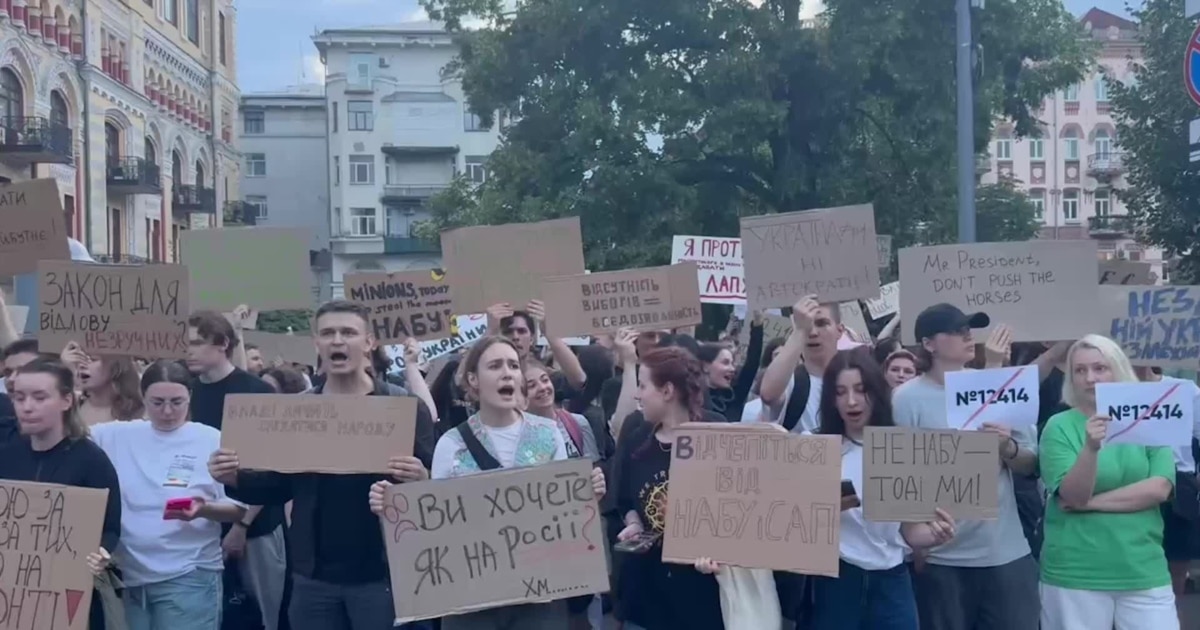
Demonstrators warn the move risks Ukraine’s European integration, with EU officials expressing grave concerns about backsliding on reform commitments. As Kyiv experiences its largest protests since 2022, the crisis jeopardizes both foreign aid and membership talks at a critical wartime moment.
- Ukraine faces nationwide protests after President Zelensky signs a bill placing anti-corruption agencies (NABU and SAPO) under prosecutor general control, raising fears of political interference.
- Critics argue the law undermines judicial independence, potentially jeopardizing EU membership talks and Western financial aid tied to anti-corruption reforms.
- Zelensky defends the move as necessary to counter “Russian influence,” while protesters call it authoritarian backsliding comparable to Moscow’s governance.
- The EU and G7 express concern, warning the changes could freeze Ukraine’s accession process and impact international support during wartime.
- Veterans and activists join demonstrations, marking the largest public challenge to Zelensky’s leadership since Russia’s 2022 invasion.
Why Ukraine’s Anti-Corruption Bill Protest Threatens EU Membership Talks
Ukraine faces a political crisis as President Volodymyr Zelensky’s controversial anti-corruption bill sparks nationwide protests and international concern. The legislation places Ukraine’s National Anti-Corruption Bureau (NABU) and Specialized Anti-Corruption Prosecutor’s Office (SAPO) under direct control of the prosecutor general, dismantling years of institutional independence established after the 2014 Maidan Revolution.
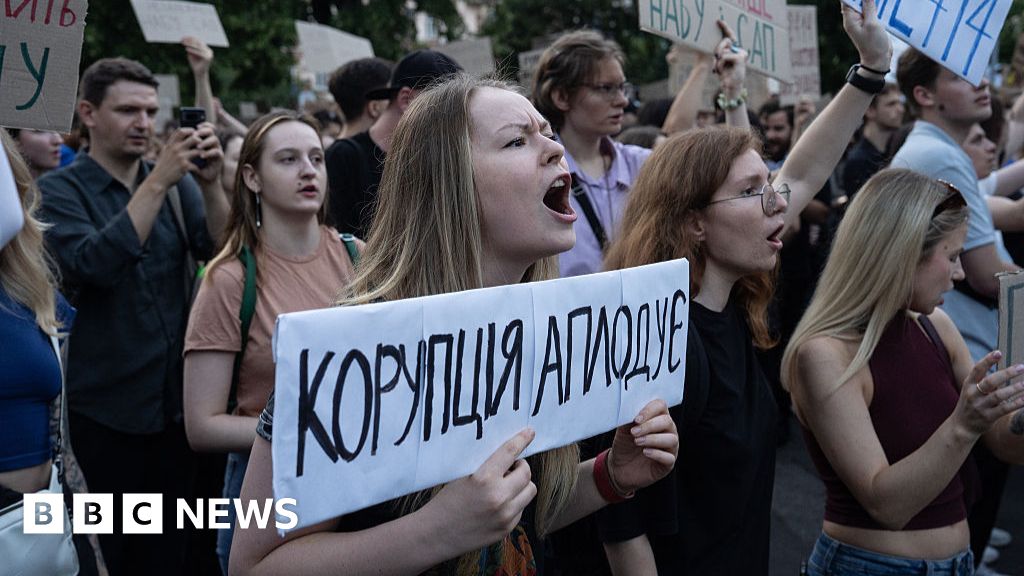
Demonstrators argue this centralization of power mimics Russian-style governance and endangers Ukraine’s democratic progress. The timing couldn’t be worse – with EU accession negotiations ongoing, this move directly contradicts key requirements for membership. European officials have repeatedly emphasized that independent anti-corruption institutions remain non-negotiable for Ukraine’s European integration.

The Core Concerns Driving Protests
The demonstrations reflect three primary concerns:
- Erosion of institutional independence: Before this law, NABU and SAPO operated autonomously, prosecuting high-level graft cases without political interference
- Disrupted EU integration: The European Commission’s 2023 report specifically praised Ukraine’s anti-corruption progress as crucial for membership talks
- Centralization of power: Critics see parallels with pre-Maidan Ukraine where prosecutors served political rather than public interests
How the Bill Changes Ukraine’s Anti-Corruption Landscape
The legislation fundamentally restructures Ukraine’s anti-corruption framework established after the 2014 revolution. Previously, NABU investigators and SAPO prosecutors cooperated while maintaining operational independence – a model praised by international partners. The new law creates a hierarchical structure where:
| Before Reform | After Reform |
|---|---|
| Independent NABU director appointed through international vetting | Director reports to prosecutor general |
| SAPO prosecutors autonomous in decision-making | Case approval required from prosecutor general’s office |
| External audits by international experts | Domestic oversight mechanisms only |

EU Reaction and Membership Implications
European officials have reacted with unusual bluntness to Ukraine’s legislative changes. EU Commissioner for Neighborhood and Enlargement Olivér Várhelyi stated: “The independence of anti-corruption institutions remains fundamental for Ukraine’s EU path.” This warning carries significant weight as Ukraine approaches key milestones in accession negotiations.
The EU’s concerns center on:
- Rule of law requirements: Chapter 23 of EU accession talks specifically addresses judicial independence and anti-corruption measures
- Financial oversight: Billions in EU reconstruction funds require transparent spending mechanisms
- Political criteria: Democratic institution-building remains prerequisite for membership approval
Comparative EU Accession Anti-Corruption Benchmarks
| Country | Anti-Corruption Reform | Accession Outcome |
|---|---|---|
| Romania | Established independent DNA prosecutors | Accelerated EU entry (2007) |
| North Macedonia | Delayed judicial reforms | Accession stalled since 2005 |
| Ukraine (2024) | NABU/SAPO independence maintained | Negotiations opened |
| Ukraine (2025) | Centralized anti-corruption control | Talks potentially frozen |
Zelensky’s Security Justification Examined
The president frames the reforms as necessary wartime measures against Russian infiltration, claiming hostile elements manipulated anti-corruption institutions. However, this rationale raises several questions:

- Lack of evidence: No public documentation of Russian penetration of NABU/SAPO has been presented
- Contradictory timing: These institutions successfully prosecuted pro-Russian figures throughout the war
- Alternative solutions: Security vetting could address infiltration without dismantling institutional independence
Military Perspective: Soldiers Divided on Anti-Corruption Fight
While most troops remain focused on frontline duties, prominent veterans have joined protests. Vitaliy Shabunin, a soldier and anti-corruption activist, publicly condemned the law: “We’re fighting for European Ukraine at the front while they build Russian-style governance in Kyiv.”
This creates a delicate situation for Zelensky, whose leadership legitimacy stems from wartime unity. The military’s evolving role in this debate includes:
- Frontline troops expressing frustration over corruption diverting military resources
- Veterans’ organizations becoming increasingly vocal on governance issues
- Concerns that politicized prosecutors could target military procurement whistleblowers
Potential Impact on Western Military Aid
The controversy emerges as Ukraine prepares for intensified combat operations requiring sustained Western support. While security assistance continues unaffected for now, congressional opponents of Ukraine funding in the U.S. have historically weaponized corruption concerns. Key considerations include:
- Republican lawmakers may demand anti-corruption conditions on future aid packages
- European parliaments facing “Ukraine fatigue” could cite democratic backsliding to reduce support
- Military contractors may face heightened scrutiny over deals with Ukrainian officials
Historical Context: Ukraine’s Anti-Corruption Journey
Understanding current protests requires examining Ukraine’s decade-long anti-corruption struggle since the Maidan Revolution. The 2014 uprising that ousted pro-Russian President Viktor Yanukovych centered on demands for accountable governance. Subsequent reforms produced mixed results until NABU’s 2015 establishment marked tangible progress.
Key milestones in Ukraine’s anti-corruption evolution:
| Period | Development | Impact |
|---|---|---|
| 2014-2016 | Post-Maidan reforms create NABU, SAPO | First independent investigations of elite corruption |
| 2017-2019 | Anti-corruption court established | Successful high-profile convictions |
| 2020-2021 | Zelensky reforms stall | EU expresses concern over slow progress |
| 2022-2024 | Wartime anti-corruption successes | NABU exposes military procurement fraud |
| 2025 | Current legislative changes | International backlash begins |
Path Forward: Can Ukraine Balance Security and Reform?
Resolving this crisis requires navigating complex competing priorities:
- Military necessity: Ukraine remains in existential conflict with Russia
- Democratic integrity: EU membership requires irreversible reforms
- Public trust: Wartime sacrifices demand accountable governance
Potential compromise solutions could include:
- Sunset clauses limiting prosecutor general oversight to wartime duration
- Enhanced international monitoring of anti-corruption cases
- Transparent security vetting processes for NABU/SAPO staff
Comments