
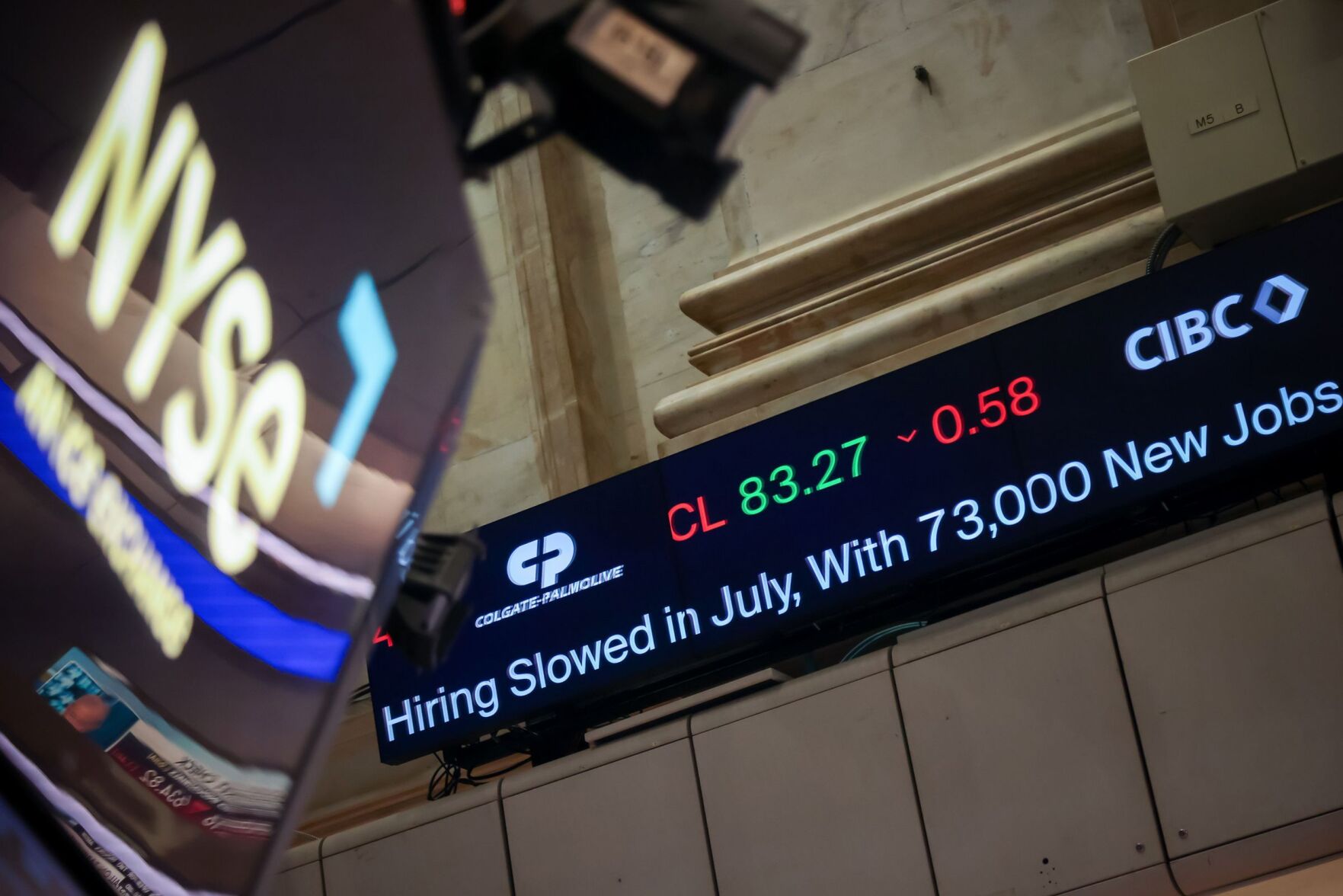
President Trump’s sudden dismissal of Bureau of Labor Statistics (BLS) Commissioner Erika McEntarfer has sparked a heated debate about the integrity of U.S. economic data. The firing followed July’s disappointing jobs report showing only 73,000 new positions and significant downward revisions to previous months’ numbers.
This unprecedented action raises serious concerns about political interference in traditionally nonpartisan economic reporting. Markets plunged as investors questioned whether future data releases would maintain their credibility under new leadership.
The controversy highlights how BLS methodology—unchanged for decades—relies on progressive revisions to refine accuracy. Experts warn that undermining these independent statistics could have lasting consequences for economic decision-making worldwide.
- President Trump abruptly fired BLS Commissioner Erika McEntarfer after a weak July jobs report (73,000 jobs) and downward revisions, accusing the agency of political bias.
- The BLS maintains strict methodological independence, with data revisions reflecting standard procedures to improve accuracy—not manipulation—as response rates improve over time.
- Markets reacted sharply (Dow dropped 500+ points) amid concerns about political interference eroding trust in historically neutral economic indicators.
- Future risks include potential White House influence on data releases, methodology changes, and reliance on private-sector alternatives like ADP payroll reports.
Why Trump Fired the BLS Chief Over Jobs Data: The Truth About Economic Reports, Revisions & What Comes Next for the Economy
The Unprecedented Firing of BLS Commissioner: Political Interference or Legitimate Accountability?
President Trump’s dismissal of Bureau of Labor Statistics (BLS) Commissioner Erika McEntarfer has sparked intense debate about the intersection of politics and economic reporting. The termination came immediately after the July jobs report showed only 73,000 jobs added—far below expectations—along with downward revisions of 258,000 jobs from previous months. Trump publicly denounced these figures as a “scam” orchestrated by Biden appointees.
The BLS has maintained a reputation for independence throughout its history, with methodologies remaining consistent across administrations of both parties. Career staffers at the agency follow strict statistical protocols designed to eliminate political influence. This firing represents the first time a sitting president has removed a BLS chief specifically due to dissatisfaction with economic data.
Historical precedents suggest such actions risk damaging the credibility of U.S. economic statistics internationally. In 2013, Argentina was censured by the IMF after its government began manipulating inflation data. Similar concerns now emerge about potential political influence on American jobs reports.


Understanding BLS Methodology: How Jobs Data Gets Calculated and Revised
The Bureau of Labor Statistics employs a dual-survey system that has remained fundamentally unchanged for decades. The Establishment Survey collects data from approximately 145,000 businesses and government agencies, while the Current Population Survey (household survey) interviews 60,000 households. This two-pronged approach helps verify findings through different measurement techniques.
Key phases of data collection and revision:
- Initial estimates based on approximately 70% response rate
- First revision incorporating an additional 15% responses
- Second revision adding remaining responses
- Annual benchmark adjustments using unemployment insurance tax records
The table below shows typical revision patterns in recent years:
| Year | Average Monthly Revision |
|---|---|
| 2024 | +/- 78,000 jobs |
| 2023 | +/- 82,000 jobs |
| 2022 | +/- 65,000 jobs |
Market Reactions and Economic Consequences of the BLS Leadership Change
The immediate financial market response to McEntarfer’s firing was severe, with the Dow Jones Industrial Average plunging over 500 points. Investors interpreted the move as signaling potential politicization of economic data, creating uncertainty about future reports’ reliability. Bond markets showed widening yield spreads as traders priced in additional risk premiums.
Potential long-term consequences include:
- Reduced confidence in government statistics among international investors
- Increased volatility around monthly economic data releases
- Possible migration toward private sector data providers
- Complications for Federal Reserve policy decisions

Small business owners and corporate executives now face tougher decisions about hiring and capital investments without trusted government data. The uncertainty could slow economic activity precisely when clarity is most needed.
Comparing Government vs. Private Sector Jobs Data: Which to Believe?
With BLS data under scrutiny, attention has turned to private alternatives like ADP’s payroll reports. While both measure employment, their methodologies differ substantially:
| Metric | BLS | ADP |
|---|---|---|
| Coverage | All nonfarm payrolls | Private sector only |
| Sample Size | 145,000 businesses | 25 million employees |
| Response Time | Survey-based (slower) | Real-time payroll data |
ADP’s strength lies in its massive dataset drawn directly from payroll processing, while BLS maintains broader coverage including government jobs. Historically, the two measures converge after BLS revisions, suggesting both capture genuine trends through different lenses.
Looking Ahead: Three Scenarios for Economic Reporting Under Trump
As the administration moves to appoint a new BLS commissioner, economists outline several possible futures for government statistics:
Scenario 1: Increased White House Oversight
Future jobs reports might undergo political review before release, potentially altering presentation formats to emphasize favorable metrics while downplaying negative ones. This could include redesigned press releases or changed emphasis between the establishment and household surveys.
Scenario 2: Methodology Changes
The administration might push for adjustments to survey techniques or seasonal adjustment formulas. While some updates occur regularly, significant changes could create breaks in historical continuity that economists rely on for long-term analysis.
Scenario 3: Private Sector Alternatives Gain Prominence
If government data loses credibility, businesses and investors may increasingly turn to sources like: – ADP payroll reports – Indeed job posting analytics – State unemployment insurance claims – Federal tax withholding data

Personal Finance Implications: How This Affects Your Wallet
The uncertainty surrounding jobs data has tangible impacts on everyday Americans:
- Retirement accounts: Market volatility could mean sudden dips in 401(k) values
- Mortgage rates: Fed policy uncertainty may lead to fluctuating interest rates
- Job searches: Weaker reported job growth could impact wage negotiations
- Consumer confidence: Mixed economic signals may affect spending decisions
The most significant risk isn’t the immediate market reaction but the potential long-term erosion of trust in economic indicators that form the foundation of financial planning.
Comments