
Sky gazers, mark your calendars for a celestial spectacle in 2025! The Moon, Venus, and star Regulus will align in a rare triple conjunction, creating a dazzling display in the predawn sky.
This extraordinary event peaks on September 19–20, 2025, when the crescent Moon passes just 2° from Venus while both meet Leo’s brightest star. The trio will shine brilliantly in the eastern horizon before sunrise, offering a breathtaking sight visible to the naked eye.
Such close planetary-star alignments occur only once every few years, making this a must-see astronomical event for both amateur stargazers and professional astronomers alike.
- A rare triple conjunction of the Moon, Venus, and Regulus will occur on September 19–20, 2025, creating a stunning display in the morning sky.
- The best viewing time is just before dawn (4:00–5:30 a.m. local time), with Venus shining at magnitude -4.3 and the crescent Moon appearing near Regulus in Leo.
- This event won’t repeat until March 2027, making it a must-see for astronomers and stargazers.
- Use binoculars or a camera with manual settings to enhance the view, especially in areas with light pollution.
- Venus’s brightness is due to its position at greatest elongation west, glowing 20 times brighter than Regulus.
Best Times to See the Moon and Venus Conjunction with Regulus in 2025: A Rare Celestial Event
When and Where to Witness the Moon-Venus-Regulus Alignment
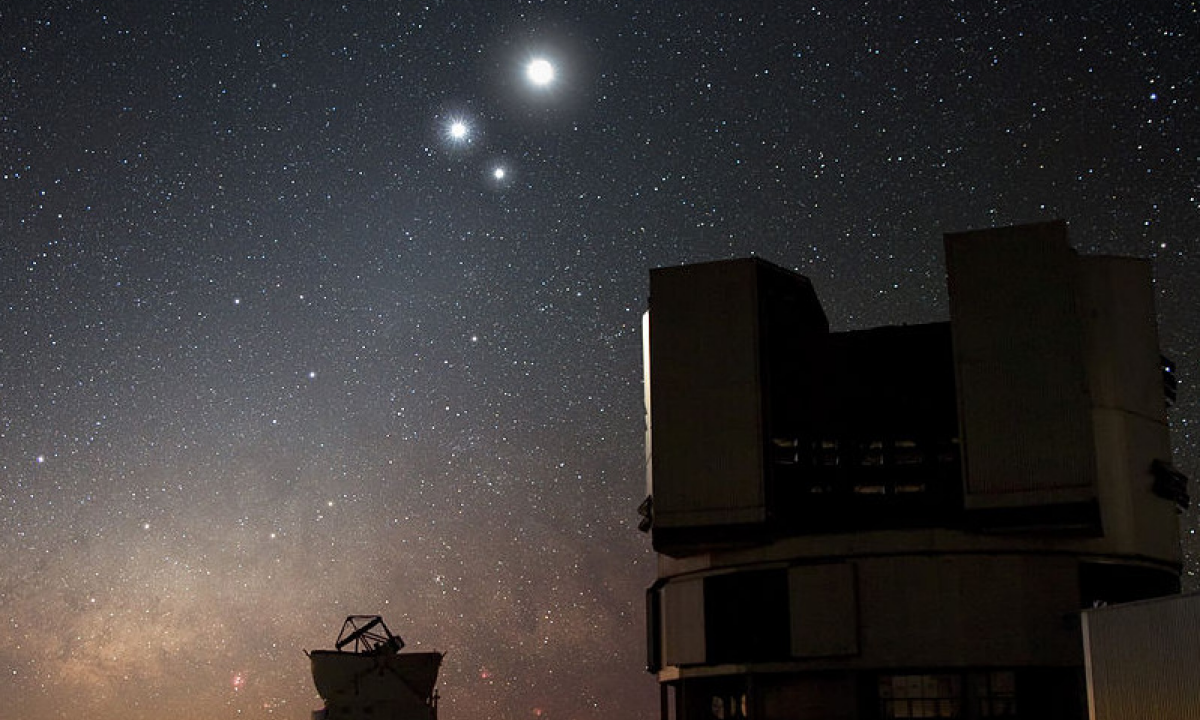
Mark your calendars for September 19-20, 2025, when a spectacular celestial trio will grace the morning sky. The Moon, Venus, and Regulus will form a tight triangular formation just before dawn, visible low on the eastern horizon. This rare conjunction offers a unique opportunity to observe three of the brightest objects in the night sky appearing unusually close together.
The optimal viewing window falls between 4:00 a.m. and 5:30 a.m. local time, when the trio will be high enough above the horizon but still dark enough for clear visibility. Venus will shine at an impressive magnitude -4.3, outshining all other celestial objects except the Moon. The crescent Moon will be approximately 15% illuminated, providing just enough light to create a stunning contrast without overpowering Venus and Regulus.


Why This Celestial Event Is So Special
While conjunctions between two celestial bodies are relatively common, a triple conjunction involving the Moon, Venus, and Regulus is exceptionally rare. The last time these three objects appeared this close was in March 2023, and the next comparable event won’t occur until March 2027. What makes the 2025 event particularly noteworthy is the proximity – Venus and Regulus will be separated by just 1.5 degrees (about three lunar diameters), with the crescent Moon positioned slightly above them.
Several factors contribute to the spectacle’s brilliance:
- Venus will be near its maximum brightness (magnitude -4.3)
- Regulus, one of the brightest stars (magnitude +1.4), provides a striking blue-white contrast
- The thin crescent Moon (phase: 15%) creates dynamic shadows and earthshine
How to Observe the Conjunction from Different Locations
Viewing conditions and exact timing will vary depending on your geographic location. Below is a detailed breakdown for major regions:
| Region | Best Viewing Time | Observation Notes |
|---|---|---|
| North America East Coast | 4:15-5:45 a.m. EDT | Look ENE, 15° above horizon |
| North America West Coast | 4:30-6:00 a.m. PDT | Slightly higher in sky (20°) |
| Western Europe | 5:00-6:30 a.m. CEST | Bright twilight may interfere later |
| Australia East Coast | 4:45-6:15 a.m. AEST | Excellent viewing conditions |
For precise timing in your location, astronomy apps like Stellarium or SkySafari can provide minute-by-minute simulations. Regardless of location, all observers should seek an unobstructed view of the eastern horizon and allow 15-20 minutes for eyes to fully adapt to the dark.
Equipment Recommendations
While the conjunction will be visible to the naked eye, different viewing equipment enhances various aspects:
- Binoculars (7×50 or 10×50): Reveal earthshine on Moon’s dark side and Regulus’s blue hue
- Telescopes (60mm+): Show Venus’s 50% illuminated phase
- Smartphones with night mode: Can capture the basic alignment if stabilized
Photographing the Celestial Trio
Capturing this rare alignment requires some preparation but can yield stunning results. Here’s a comprehensive guide:
Camera Settings:
- DSLR/Mirrorless: Manual mode, ISO 400-1600, f/4-f/8, 1-5 second exposure
- Smartphone: Use night mode with 3-10 second exposure
- Focus: Manual focus set to infinity (check on distant terrestrial lights first)
Composition Tips:
- Include foreground elements (trees, buildings) for scale
- Frame the trio in the upper third of your image
- Shoot in RAW format for better post-processing
The Science Behind the Conjunction
This celestial event represents a beautiful demonstration of orbital mechanics. Venus completes an orbit around the Sun every 225 days, while the Moon orbits Earth every 27.3 days. Regulus, though appearing nearby, is actually 79 light-years distant and merely forms a visual alignment from our perspective on Earth.
Several scientific factors make this conjunction particularly notable:
- Venus reaches greatest western elongation (46° from Sun) on September 17, 2025
- The Moon will be 2 days past new phase, creating optimal crescent visibility
- Earth’s position in late September provides favorable morning viewing conditions
Future Celestial Events and Viewing Opportunities
While the 2025 conjunction is exceptional, skywatchers can look forward to other notable celestial gatherings:
| Date | Event | Notes |
|---|---|---|
| April 7, 2025 | Venus-Saturn Conjunction | Evening sky, 3° separation |
| March 3, 2027 | Next Moon-Venus-Regulus Triple | Evening sky appearance |
| November 22, 2025 | Jupiter-Venus Conjunction | 1° separation at dusk |
For those who miss the September 20 peak, the Moon-Venus pair will remain visually striking for about three days before and after the event, though Regulus will gradually move farther away each morning.
Cultural and Historical Significance
Throughout history, such celestial alignments have held deep meaning across cultures:
- Ancient Babylon: Venus conjunctions were used for divination and predicting rulers’ fates
- Mayan Civilization: Carefully tracked Venus cycles for agricultural and ceremonial purposes
- Traditional Chinese Astronomy: Viewed such events as interactions between celestial officials
Modern interpretations vary between scientific appreciation of orbital mechanics and astrological symbolism regarding new beginnings in Leo season. Regardless of perspective, the visual spectacle remains universally impressive.
Comments