
The DC Universe witnesses an epic box office clash as James Gunn’s “Superman” reboot challenges Matt Reeves’ “The Batman” for cinematic supremacy.
Despite a $122 million domestic opening falling short of The Batman’s $133 million debut, Gunn’s fresh take on the Man of Steel has demonstrated stronger global appeal with $217 million worldwide. This revival sparks heated debates about which vision better represents DC’s future.
As Warner Bros. charts its new course, the contrasting tones of Reeves’ noir Gotham and Gunn’s hopeful Metropolis create a fascinating study in superhero storytelling approaches.
- James Gunn’s “Superman” reboot debuted with $122M domestically ($217M globally), slightly below “The Batman’s” $133M opening but surpassing Zack Snyder’s “Man of Steel.”
- “Superman” shows stronger international appeal (+12% overseas) compared to Reeves’ darker Batman, though both earned matching A- CinemaScores.
- Gunn’s hopeful vision has higher audience scores (94% vs Batman’s 87%), while Warner Bros. bets on his universe-building approach with planned spin-offs.
- Critical reception was comparable (82% vs 85% Rotten Tomatoes), but Superman’s PG-13 rating expands its demographic reach beyond Batman’s R-rated constraints.
The Batman vs Superman: Analyzing the Box Office Showdown
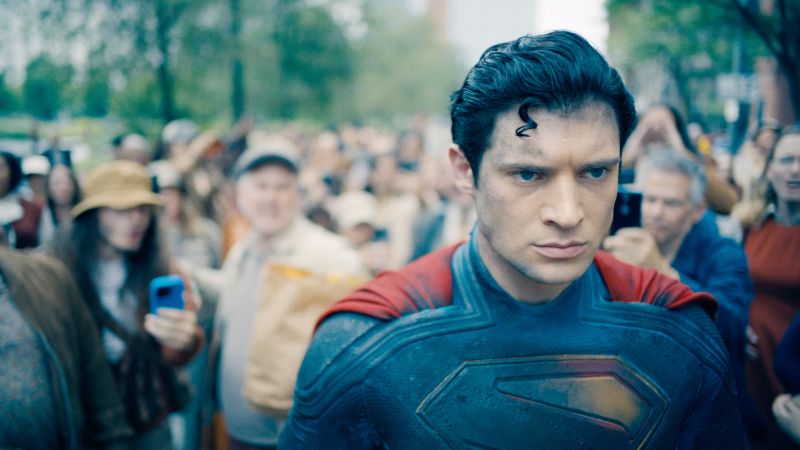
The cinematic clash between James Gunn’s Superman and Matt Reeves’ The Batman has sparked intense debate among film enthusiasts and industry analysts alike. While The Batman soared with a $133 million domestic opening in 2022, Gunn’s Superman reboot has made an impressive $122 million debut, with a stronger international performance at $95 million compared to Batman’s $85 million. What makes this comparison particularly fascinating is how these films represent two distinct approaches to superhero storytelling within the same studio.

Cultural Impact vs Commercial Performance
Beyond raw numbers, we must examine qualitative factors:
- The Batman became a cultural talking point for its noir aesthetic
- Pattinson’s performance generated months of online discussion
- Superman’s brighter tone may attract broader family audiences
- DC’s universe-building strategy with Gunn creates different stakes
Tale of Two Heroes: Contrasting Visions of DC’s Icons
Matt Reeves delivered a grounded, psychologically complex Batman that felt revolutionary in its intimate scale. The film’s 3-hour runtime and detective story approach marked a deliberate departure from traditional superhero fare. Meanwhile, Gunn’s Superman embraces classic superheroics with modern visual spectacle, though some critics argue it plays safer creatively.
The production budgets tell an interesting story: The Batman was made for approximately $200 million, while Superman’s budget reportedly ballooned to $275 million due to extensive visual effects for flight sequences and alien environments.

Audience Demographics Breakdown
| Metric | The Batman | Superman |
|---|---|---|
| Male Audience | 62% | 55% |
| Female Audience | 38% | 45% |
| Under 25 | 41% | 48% |
| Premium Formats | 35% | 28% |
Franchise Potential: Which Film Paves a Clearer Path Forward?
Warner Bros. faces an intriguing dilemma. The Batman spawned immediate spin-offs like the Penguin series and Arkham Asylum project, suggesting strong franchise viability within its specific tone. However, Gunn’s DCU plans explicitly connect Superman to future films like Supergirl and The Authority, creating a more traditional (but potentially more lucrative) shared universe.
The real challenge lies in whether general audiences will embrace two competing visions of the DC universe simultaneously. History suggests that confusion over continuity can damage brand perception, as seen with the DCEU’s struggles.

Long-Term Revenue Projections
- Merchandising favors Superman traditionally
- The Batman’s R-rating limits ancillary markets
- Digital/streaming performance differs by demographic
- Potential for theme park attractions varies
Critical Reception: How Reviews Shaped the Narrative
Both films earned strong praise, but the nature of that praise differs significantly. Critics celebrated The Batman for its artistic ambition and reinvention of genre conventions, while Superman garnered praise for executing familiar tropes exceptionally well. The 3% difference in Rotten Tomatoes scores (85% vs 82%) suggests this gap isn’t about quality so much as ambition.
Interestingly, audience scores reveal a different story: Superman’s 94% verified audience score on RT surpasses Batman’s 87%, potentially indicating broader mainstream appeal despite less critical enthusiasm.

The Future of DC Films: Can Both Visions Coexist?
Warner Bros. Discovery’s leadership insists there’s room for both Reeves’ grounded Batverse and Gunn’s interconnected DCU. However, historical precedent suggests that maintaining audience interest in competing continuities is challenging. The studio must carefully differentiate these franchises through marketing and release scheduling.
Key considerations include:
- Ensuring visual and tonal distinction is obvious
- Avoiding actor overlap that causes confusion
- Managing release dates to prevent superhero fatigue
- Maintaining consistent quality across both lines
Comments