
New intelligence assessments reveal that recent U.S. airstrikes on Iran’s nuclear facilities had far more limited impact than initially claimed. While the Fordo site suffered significant damage, other key facilities remain operational, reducing the program’s delay to just months—not years.
Contrary to political declarations of Iran’s nuclear program being “obliterated,” the strikes failed to destroy critical uranium stockpiles or halt enrichment capabilities at undisclosed locations. This gap between rhetoric and reality raises urgent questions about Tehran’s accelerated path to weapons-grade material.
The findings suggest military action alone cannot resolve the nuclear standoff, as Iran retains both the capacity and likely the resolve to rebuild faster than anticipated.
- US intelligence reveals Iran’s nuclear program was only delayed by months, contradicting Trump administration claims of total destruction.
- Only Fordo facility suffered significant damage among three targeted sites (Fordo, Natanz, Isfahan), with core nuclear capabilities remaining operational elsewhere.
- Iran’s uranium stockpile was largely moved to secret locations before the strikes, preserving 60-70% of highly enriched uranium.
- Military limitations prevented comprehensive strikes due to factors like civilian proximity and incomplete intelligence on facility layouts.
- The partial success creates a dangerous stalemate that may accelerate Iran’s nuclear efforts while diminishing diplomatic solutions.
US Airstrikes Fall Short: Iran’s Nuclear Program Only Delayed by Months
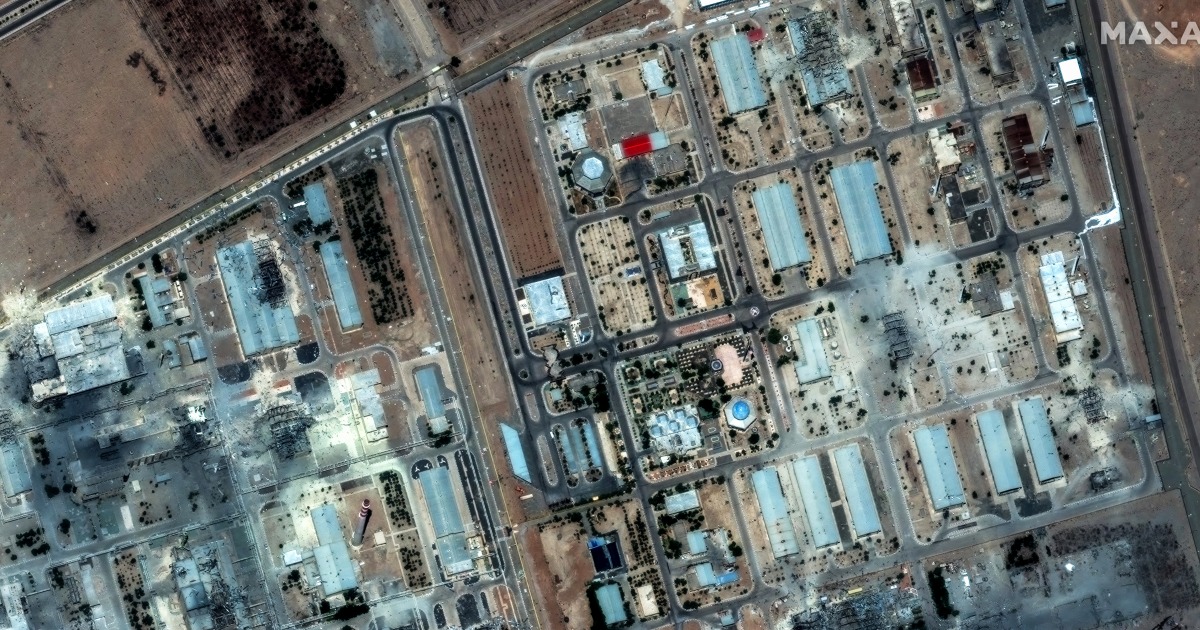
Recent US intelligence assessments contradict White House claims about the effectiveness of strikes against Iran’s nuclear program. While President Trump declared complete destruction of Iran’s nuclear capabilities, satellite imagery and classified reports reveal only the Fordo facility sustained significant damage. Contrary to administration assertions, Iran’s breakout timeline appears delayed by merely 3-6 months rather than being permanently disabled.
The strikes targeted three major nuclear sites:
- Fordo (underground enrichment facility)
- Natanz (main uranium enrichment plant)
- Isfahan (conversion and research center)
Analysis indicates Iran’s nuclear infrastructure remains largely intact due to three critical factors:
- Relocation of advanced centrifuges before attacks
- Undisclosed storage sites for enriched uranium
- Built-in redundancy across facilities

Assessing the Actual Damage at Fordo
The underground Fordo facility suffered the most substantial impacts, with GBU-57 bunker busters penetrating to its deepest levels. However, the damage assessment reveals:
| Component | Damage Status | Recovery Timeline |
|---|---|---|
| IR-6 Centrifuges | 30% destroyed | 4-5 months |
| Uranium stockpiles | Minimal loss | N/A (pre-relocated) |
| Electrical systems | Severe damage | 3 months |
Iran’s Hidden Nuclear Capabilities: The Elephant in the Room

Intelligence agencies estimate Iran maintains several undeclared nuclear sites that escaped targeting entirely. These covert facilities likely house:
- Next-generation IR-8 centrifuges
- 60% enriched uranium stocks
- Weaponization research labs
The most alarming revelation comes from IAEA whistleblowers suggesting Iran had relocated approximately 70% of its 60%-enriched uranium to mountain tunnels prior to the strikes. This stockpile alone could theoretically provide enough material for 2-3 nuclear devices after additional enrichment.
Military Limitations: Why the US Couldn’t Achieve Total Destruction
The selective targeting reflects operational constraints faced by US forces:
| Constraint | Impact | Example |
|---|---|---|
| Intelligence gaps | Partial facility mapping | Natanz’s new underground halls |
| Collateral concerns | Limited strike options | Isfahan’s civilian proximity |
| Weapon limitations | Bunker penetration depth | Fordo’s lowest levels untouched |
Military planners faced an impossible calculus – striking decisively enough to matter while avoiding civilian casualties that could trigger regional war. The compromise leaves Iran’s nuclear ambitions battered but far from broken.
The Breakout Timeline: From Months to Weeks?
Pre-strike estimates placed Iran’s theoretical breakout time at:
- 12 days to produce weapons-grade uranium
- 6 months to develop deliverable warhead
Post-strike assessments suggest:
- 90 days uranium enrichment timeline
- Unknown weaponization progress
- Potential covert advances at hidden sites
Most alarmingly, intelligence suggests Iran may have pre-fabricated nuclear components stored at secure locations, potentially slashing the weaponization timeline.
The Diplomatic Fallout: A Peace Process in Shambles

The strikes have fundamentally altered the diplomatic landscape:
- JCPOA revival now politically impossible
- Iran suspending all IAEA access
- European mediation efforts collapsing
Israel’s Next Move: The Covert Option
With limited strike success, Israel faces three unpalatable choices:
- Accept a nuclear-capable Iran
- Launch broader military strikes
- Expand covert operations
Historical patterns suggest Mossad will likely intensify:
- Assassinations of nuclear scientists
- Cyber attacks on industrial systems
- Sabotage of supply chains
Conclusion: Short-Term Gain, Long-Term Peril
The strikes ultimately represent a tactical success but strategic failure:
| Short-Term Win | Long-Term Loss |
|---|---|
| Temporary enrichment delay | Permanent IAEA access lost |
| Demonstrated military resolve | Strengthened Iranian hardliners |
| Limited facility damage | Accelerated covert program |
The road ahead offers no good options – only varying degrees of risk in confronting Iran’s nuclear ambitions versus accepting their eventual realization.
Comments