
The San Francisco Giants are reportedly in serious pursuit of Pittsburgh Pirates’ ace Mitch Keller as they aim to solidify their playoff rotation before the trade deadline. Keller, who is scheduled to face the Giants tonight in what could be his final start for Pittsburgh, has emerged as their top trade target following his career-best season.
Sources indicate the Giants view Keller as an ideal #3 or #4 starter who could provide much-needed stability behind Logan Webb. With controllable years remaining on his contract and groundball-inducing stuff that plays well at Oracle Park, the 28-year-old right-hander represents exactly what San Francisco needs for their postseason push.
- The SF Giants are actively pursuing Pirates’ ace Mitch Keller as a mid-rotation upgrade, with his upcoming July 29 start against San Francisco potentially being his final appearance for Pittsburgh.
- Keller’s career-best season (3.85 ERA, 148 Ks in 142 IP) and controllable contract through 2027 make him an ideal target, though the Pirates’ asking price reportedly includes top-100 prospects.
- Scouts will closely evaluate Keller’s performance against the Giants tonight, particularly his fastball command and slider sharpness, which could accelerate trade discussions before the deadline.
SF Giants Reportedly Targeting Mitch Keller to Strengthen Playoff Rotation
The San Francisco Giants are aggressively pursuing Pittsburgh Pirates’ right-handed starter Mitch Keller in a potential blockbuster trade to address their pitching needs for the postseason push. According to multiple league sources, the Giants have identified Keller as their top rotation target due to his controllable contract (through 2027) and proven performance as a mid-rotation starter.
Keller, 28, is having a breakout season with a 3.85 ERA and 148 strikeouts in 142 innings pitched. His ability to generate ground balls (47.3% groundball rate) would play exceptionally well at pitcher-friendly Oracle Park. The former All-Star has shown improved command this season, walking just 2.6 batters per nine innings while maintaining consistent velocity deep into games.
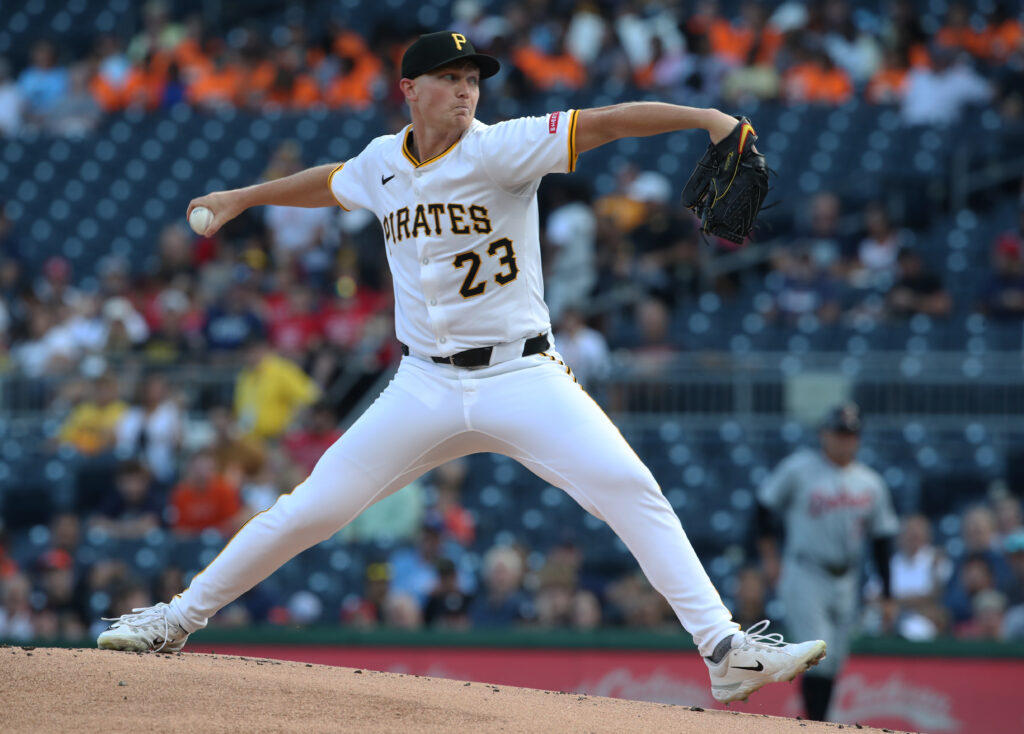
The Giants’ current rotation behind ace Logan Webb has been inconsistent, with Blake Snell struggling through injuries and Kyle Harrison showing typical rookie growing pains. Keller would immediately slot in as the #2 or #3 starter, providing much-needed stability. His 24.7% strikeout rate would rank second among Giants starters, and his durability (27+ starts each of last three seasons) addresses San Francisco’s need for reliable innings.
The speculated trade becomes even more intriguing as Keller is scheduled to face the Giants on July 29 – potentially his final start in a Pirates uniform if talks progress quickly. Pittsburgh reportedly remains undecided about moving their ace, creating high-stakes drama for tonight’s matchup.

Scouting Mitch Keller: Why He Fits the Giants’ Needs
From a scouting perspective, Keller’s evolution as a pitcher makes him an ideal fit for San Francisco. After early-career inconsistencies, he’s developed into a complete starter with four quality pitches:
- Four-seam fastball (94-96 mph) with improved command up in the zone
- Slider that has become his best swing-and-miss weapon (35.2% whiff rate)
- Curveball he uses effectively against left-handed hitters
- Sinker that generates weak contact when ahead in counts
Perhaps most importantly, Keller’s pitch mix produces results that should translate well to Oracle Park. His 47.3% groundball rate would rank second among Giants starters behind only Logan Webb. While some scouts express concern about his home/road splits (4.36 ERA away from PNC Park this season), advanced metrics suggest much of that stems from unlucky BABIP (.339 road vs .282 home) rather than performance decline.

Keller’s ability to work deep into games (six consecutive starts of 6+ innings) would also benefit a Giants bullpen that’s been overworked. His 3.85 ERA this season ranks 21st among qualified NL starters, and his 3.3 WAR demonstrates solid #2 starter production – exactly what San Francisco needs behind Webb.
Trade Package Breakdown: What Would It Take to Acquire Keller?
The Pittsburgh Pirates reportedly seek a significant return for Keller given his age (28), performance ceiling, and remaining team control (three additional seasons). Industry sources indicate the asking price starts with at least one top-100 prospect plus additional pieces – similar to what Cincinnati received for Luis Castillo in 2022.
Potential trade chips from the Giants system include:
| Top Prospects | Position | ETA |
|---|---|---|
| Carson Whisenhunt | LHP | 2025 |
| Grant McCray | OF | 2026 |
| Reggie Crawford | LHP/1B | 2026 |
The Cubs are reportedly offering outfielder Owen Caissie in their Keller pursuit, setting a competitive market. San Francisco may need to include Whisenhunt (their #3 prospect per MLB Pipeline) as the centerpiece while resisting demands for elite prospects like Bryce Eldridge (#1) or Marco Luciano (#2). Secondary pieces could include young MLB-ready talent like outfielder Luis Matos or reliever Randy Rodriguez.
Complicating matters, the Pirates remain undecided about trading Keller at all. Pittsburgh GM Ben Cherington has stated publicly they aren’t “motivated sellers,” meaning only an overwhelming offer might force action. With the Mets and Yankees also reportedly interested, the Giants may need to move quickly if convinced Keller puts them over the top.
What Tonight’s Start Means for Trade Talks
Keller’s scheduled July 29 start against San Francisco takes on amplified importance as essentially a live audition for the Giants front office. Scouts from multiple teams will be closely evaluating:
- Fastball velocity and late life
- Slider effectiveness against right-handed batters
- Command and composure under trade deadline scrutiny
- Pitch mix sequencing with runners on base
The Giants lineup poses an interesting test – while collectively struggling against right-handed pitching (.685 OPS vs RHP), they feature disciplined hitters like Thairo Estrada and Mike Yastrzemski who force starters to execute in hitter’s counts. How Keller adjusts when his fastball command wavers (9.3% walk rate with bases empty vs 3.2% with runners on) could determine San Francisco’s final evaluation.

A strong outing likely accelerates talks, with the deadline just days away. Conversely, struggles against San Francisco’s lineup might cool interest or lower Keller’s trade value. The Pirates have maintained they won’t sell low, meaning anything less than Keller’s best performance could effectively take the Giants out of the running if other teams remain aggressive.
Potential Impact: Would Keller Make the Giants NL West Favorites?
While adding Keller wouldn’t singularly catapult San Francisco past the Dodgers in the NL West, it would significantly improve their playoff odds and postseason ceiling. Projections suggest:
- Rotation Upgrade: Keller represents a 1.5 WAR improvement over current #5 options
- Bullpen Protection: His innings eat would prevent overworking relievers
- Playoff Flexibility: Allows Webb to start Wild Card game with Keller in Game 2
The bigger question is whether the Giants should invest prospect capital in rotation help when their offense ranks just 24th in runs scored. While rumors persist about additional moves for bats, addressing both needs adequately before the deadline seems unlikely. This puts GM Farhan Zaidi in a difficult position – improve the team’s clearest weakness (rotation depth) while knowing lineup limitations may cap their potential regardless.
Keller’s presence would undoubtedly help, particularly in a short postseason series where his slider could neutralize righty-heavy lineups like Philadelphia. But unless San Francisco finds unexpected offensive help as well, they risk remaining a step behind the National League’s elite despite paying a steep prospect price.
Alternative Trade Targets If Keller Talks Stall
Should Pittsburgh’s asking price prove too high or talks stall, the Giants have several fallback options to consider:
| Pitcher | Team | ERA | Contract |
|---|---|---|---|
| Jack Flaherty | Cardinals | 4.12 | FA after 2025 |
| Erick Fedde | White Sox | 3.23 | Through 2026 |
| Paul Blackburn | Athletics | 3.97 | Through 2025 |
None offer Keller’s combination of team control and performance stability, meaning the Giants would need to either pay more later (via offseason market) or accept lesser alternatives. Fedde presents an interesting case as a low-cost breakout with better numbers than Keller this season, albeit with less track record and stuff that might not play up in October.
The wild card remains whether sellers like Miami (Jesus Luzardo) or Cleveland (Triston McKenzie) decide to make their starters available as deadline approaches. But with San Francisco clearly prioritizing controllable arms over rentals, their options dwindle quickly beyond Keller as other contenders also seek rotation help.
Historical Precedent: Comparing Keller to Past Deadline Acquisitions
Recent trade deadline history provides context for evaluating Keller’s potential impact:
- Success: Jordan Montgomery (2018 Cardinals), became postseason hero
- Disappointment: Jose Quintana (2017 Cubs), never met expectations
- Mixed: Tyler Glasnow (2018 Pirates), flashed brilliance between injuries
Keller sits somewhere between the Montgomery and Quintana archetypes – less proven than Quintana at time of his trade, but with better raw stuff than Montgomery displayed. His slider-heavy approach resembles a poor man’s version of what made Blake Snell so dominant in Tampa Bay, though with less velocity.
The deciding factor may be Keller’s makeup – praised by coaches for his preparation and competitiveness. These “intangibles” often separate good deadline additions from great ones. While no guarantee, Keller appears to have the mental toolkit required to handle San Francisco’s playoff push better than most available alternatives.
Ultimately, the Giants must determine whether Keller represents the final piece for a legitimate championship run or simply an expensive complement to a flawed contender. With tonight’s start providing perhaps their best scouting opportunity, the decision timeline accelerates dramatically.
Comments