
The Bonneville Salt Flats have witnessed another tragic chapter in speed racing history with Chris Raschke’s fatal crash during a 2024 record attempt. This incident, occurring at nearly 472 mph, reignites debates about safety in extreme motorsports.
Raschke’s death draws inevitable parallels to Craig Breedlove’s legendary 1996 survival, highlighting decades of unresolved risks on the salt. As the racing community mourns, questions emerge about whether tradition outweighs the need for modern safety innovations.
With Raschke’s Speed Demon having previously achieved 459.734 mph, this tragedy underscores the fine line between groundbreaking achievement and catastrophe in land speed racing.
- Chris Raschke fatally crashed during a 2024 Bonneville Speed Week record attempt, reaching speeds of 472 mph before losing control.
- The tragedy draws parallels to Craig Breedlove’s 1996 crash, highlighting the evolving yet still insufficient safety measures in land speed racing.
- Raschke’s Speed Demon had previously achieved a blistering 459.734 mph exit speed, demonstrating its record-breaking potential before the fatal incident.
- The incident has sparked debates about mandatory safety upgrades in streamliners, including ejection systems that could add weight but save lives.
- This marks one of Bonneville’s deadliest crashes in Speed Week history, potentially prompting SCTA to reconsider safety regulations for future events.
Chris Raschke’s Bonneville Salt Flats Crash: Examining the Fatal Speed Record Attempt and Its Legacy Compared to Craig Breedlove’s Historic Runs
The Tragic Crash That Shook the Land Speed Racing World

On August 12, 2024, the Bonneville Salt Flats witnessed one of its most devastating crashes when veteran driver Chris Raschke lost control of his Speed Demon streamliner during a record attempt. Eyewitnesses reported the vehicle was traveling at approximately 472 mph when it violently veered off course, flipping multiple times before coming to rest in a cloud of salt dust.
Raschke, a seasoned racer with numerous records to his name, was pronounced dead at the scene. The impact forces were so extreme that even the advanced safety measures built into the Speed Demon couldn’t prevent this tragedy. This incident marks the first fatality at Bonneville Speed Week since Art Arfons’ crash in 2007.
The racing community immediately drew comparisons to Craig Breedlove’s famous 1996 crash where he miraculously walked away from a 675 mph wreck. However, the key difference lies in vehicle design – Breedlove’s Spirit of America featured an escape capsule absent in Raschke’s machine.

Dissecting the Speed Demon’s Design Choices
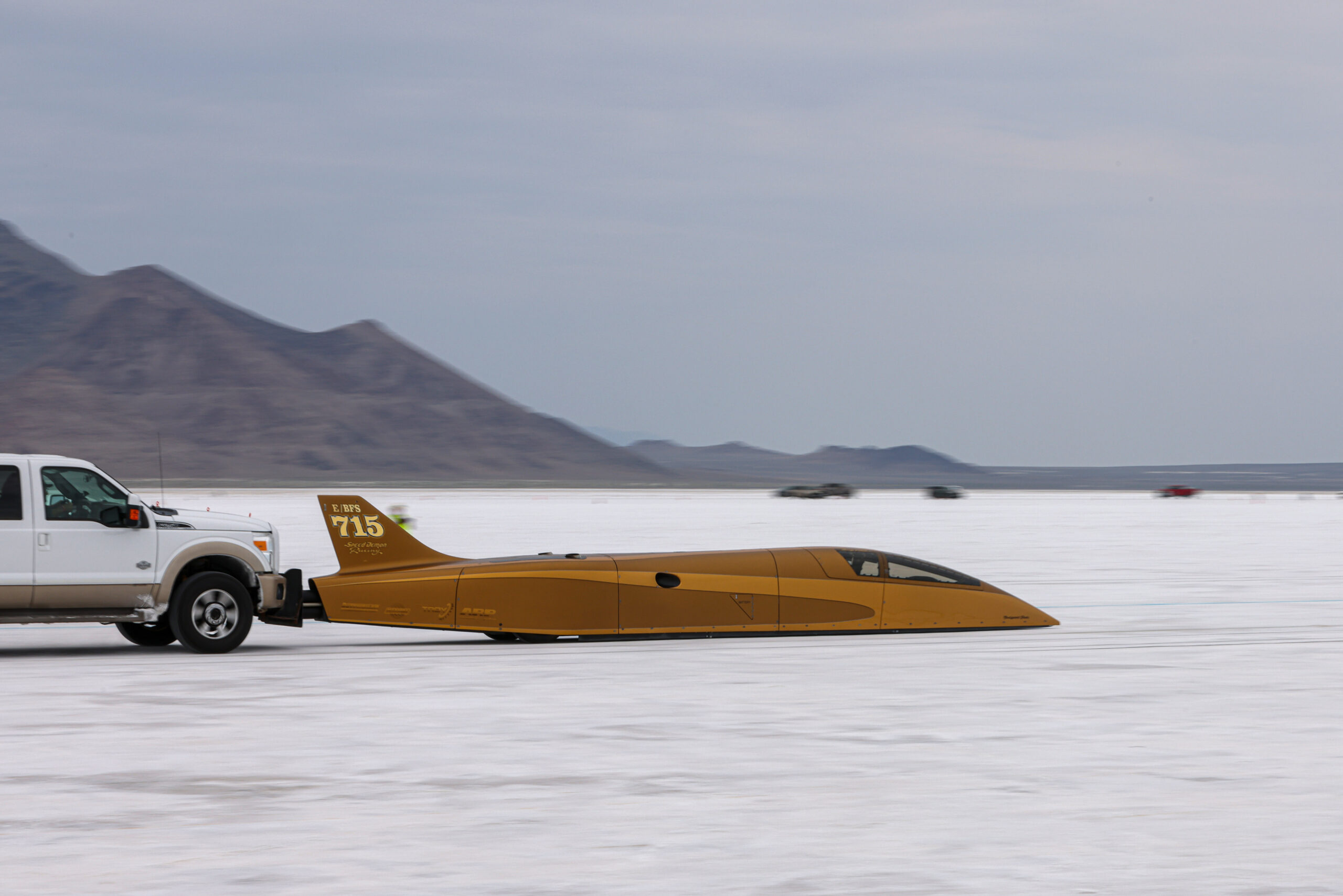
The Speed Demon streamliner represented cutting-edge land speed racing technology. Prior to the crash, it had:
- Set a blistering 459.734 mph exit speed just days earlier
- Won 12 prestigious Hot Rod trophies
- Featured advanced carbon fiber construction
However, post-crash analysis revealed critical design decisions that may have contributed to the tragedy’s severity:
| Trait | Impact |
|---|---|
| Lightweight chassis | Prioritized speed over structural integrity |
| Open cockpit design | Left driver vulnerable to crushing forces |
| Lack of ejection system | Eliminated emergency escape option |
Craig Breedlove’s Legacy: The Gold Standard for Survival

Craig Breedlove’s 1996 crash at 675 mph remains the benchmark for survivability in extreme speed accidents. His Spirit of America Sonic Arrow disintegrated around him, yet he escaped with only minor injuries thanks to:
- A specially designed escape capsule separating from the chassis
- Multi-point harness system distributing impact forces
- Roll cage constructed from military-grade aluminum
The key differences between Breedlove’s and Raschke’s crashes highlight three decades of safety evolution:
- Impact forces: Breedlove’s vehicle slid while Raschke’s tumbled
- Safety philosophy: Escape vs. containment approaches
- Technological advances: Materials science breakthroughs
The Future of Land Speed Racing After Raschke
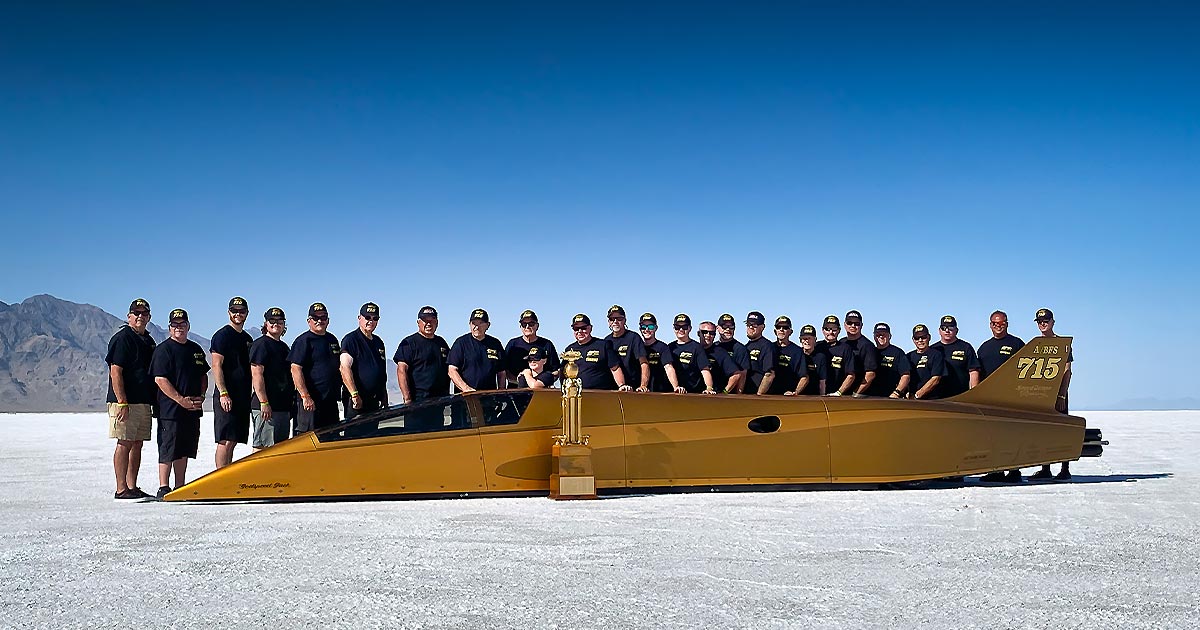
The Southern California Timing Association (SCTA) faces mounting pressure to implement sweeping safety reforms after Raschke’s death. Potential changes under consideration include:
- Mandatory ejection systems for vehicles exceeding 400 mph
- Enhanced medical response teams with specialized extraction equipment
- Redesigned course layouts to minimize multiple-roll scenarios
These proposals face significant pushback from traditionalists who argue they would fundamentally alter the nature of land speed racing. The core dilemma remains – how to balance:
- The pursuit of mechanical limits
- Driver safety
- The event’s historic character
Chris Raschke’s Legacy: More Than Just Numbers
Beyond the statistics and safety debates, Raschke’s death leaves an enormous void in motorsports. His contributions included:
- Pioneering aerodynamic designs later adopted by Formula 1
- Mentoring dozens of young engineers entering motorsports
- Advocating for women in land speed racing
The most heartbreaking aspect emerges in personal accounts from his team:
- Turned down lucrative NASCAR offers to stay loyal to Bonneville
- Personally funded scholarships for engineering students
- Was planning retirement to spend time with grandchildren
The Physics of Tragedy: Understanding 400+ MPH Crashes
At the speeds involved in Raschke’s crash, the physics become terrifying:
- Impact forces equivalent to falling from a 40-story building
- Deceleration rates surpassing 100 Gs
- Airframe temperatures exceeding 300°F from friction
Survivability depends on three factors:
- Controlled energy dissipation – spreading impact over time/distance
- Structural integrity – maintaining survival space
- Restraint systems – preventing fatal organ damage
Could Technology Have Saved Raschke?
Post-crash analysis suggests several technologies could have improved survival chances:
| Technology | Potential Impact |
|---|---|
| Active suspension stabilization | Might have prevented initial veer |
| Emergency parachute braking | Could reduce speed before impact |
| Gyroscopic orientation control | Potentially prevent multiple rolls |
The brutal reality? Even implementing all available technologies might not have changed the outcome given the extreme circumstances.
Balancing Risk and Progress: A Community Divided
The racing world now faces fundamental disagreements:
- Traditionalists argue accidents are an accepted part of pushing boundaries
- Safety advocates demand immediate regulatory intervention
- Engineers seek middle-ground technological solutions
The Raschke family has surprisingly urged against overregulation, releasing a statement reading in part: “Chris knew the risks and wouldn’t want his passion legislated into mediocrity.”
Comments