
The year 2025 promises extraordinary northern lights displays as solar maximum activity intensifies, with Wisconsin emerging as a prime viewing location. Forecasters predict aurora visibility as far south as the Midwest during August’s geomagnetic storms, offering rare opportunities for stargazers to witness this celestial spectacle.
Unlike typical years when the aurora remains confined to polar regions, 2025’s solar cycle may paint Wisconsin’s skies with vibrant hues. Photographers should prepare their equipment, as these conditions could yield the most dramatic auroral displays in decades.
With proper planning and favorable weather, observers might enjoy nature’s greatest light show from designated Dark Sky Parks across the state, no passport required.
- 2025’s solar maximum will enhance northern lights visibility in Wisconsin, with potential sightings on August 18-19 during a predicted geomagnetic storm (Kp 6).
- Top photography spots include Newport State Park (Dark Sky designation) and Kohler-Andrae State Park, with recommended settings: wide aperture (f/2.8+), 5-30s exposures, and ISO 800-3200.
- Unlike Alaska/Iceland (100+ nights/year), Wisconsin offers 5-10 aurora nights annually, but 2025’s rare solar activity makes mid-latitude viewing possible without international travel.
- Essential gear includes tripods, thermal clothing, and aurora alert apps (NOAA Space Weather Center), with optimal viewing between 10PM-2AM under clear, dark skies.
2025 Northern Lights Aurora Borealis Forecast: Best Viewing Spots in Wisconsin & Photography Guide During Solar Maximum
When Will the Northern Lights Be Visible in Wisconsin in 2025?
The 2025 aurora season presents a golden opportunity for Wisconsin skywatchers, as solar maximum conditions enhance visibility of the northern lights far beyond their typical range. Experts predict the most active period will occur from late August 2025 through April 2026, with peak visibility during equinox months when Earth’s magnetic field aligns optimally with solar winds.
Recent space weather models indicate several promising viewing windows, particularly around August 18-19 when a strong geomagnetic storm (Kp 6+) could make the aurora visible across 16 U.S. states. The best viewing times typically fall between 10 p.m. and 2 a.m., with midnight offering prime conditions when solar particles interact most intensely with our atmosphere.

Unlike typical years when Wisconsin might see 5-10 aurora displays, 2025 could deliver 20+ visible events thanks to heightened solar activity. Key indicators to watch include NOAA’s 30-minute aurora forecast, solar wind speeds exceeding 500 km/s, and southward-pointing interplanetary magnetic fields (Bz).

Prime Aurora Viewing Locations in Wisconsin
Wisconsin’s geography offers several exceptional spots for observing the northern lights, each with unique advantages:
- Newport State Park – Wisconsin’s only International Dark Sky Park with minimal light pollution
- Rock Island State Park – Remote Lake Michigan location with 360° views
- Northern Highland-American Legion State Forest – Dark skies over crystal-clear lakes
- Horicon Marsh – Open horizons perfect for low-lying auroras
- Chequamegon-Nicolet National Forest – Wilderness areas far from city lights
When selecting a location, prioritize areas with unobstructed northern views and check light pollution maps. Elevated spots often provide better visibility as they rise above ground-level haze and humidity.
Essential Equipment for Aurora Chasing
While the naked eye can enjoy spectacular displays during strong storms, proper gear enhances the experience:
| Item | Purpose |
|---|---|
| Red flashlight | Preserves night vision |
| Folding chair | Comfort during long waits |
| Star chart app | Identifies constellations behind auroras |
| Thermos | Hot drinks maintain core temperature |
Photographing Wisconsin’s Northern Lights in 2025
The 2025 solar maximum presents unprecedented opportunities for capturing stunning aurora images in mid-latitude locations like Wisconsin. These celestial displays during solar peak periods often feature vivid colors and complex structures rarely seen farther south.

Camera Settings for Perfect Aurora Shots
Master these technical elements for professional-quality aurora photos:
- Aperture: f/2.8 or wider (f/1.4-f/2.0 ideal)
- Shutter Speed: 5-15 seconds (adjust for aurora movement)
- ISO: 1600-6400 (balance brightness with noise)
- Focus: Manual mode set to infinity
- File Format: RAW for maximum editing flexibility
Wide-angle lenses (14-24mm) capture the full splendor of auroral displays, while sturdy tripods prevent blur during long exposures. Remote shutters or timer functions eliminate camera shake from button presses.
Understanding Solar Maximum and Aurora Frequency
The sun follows an 11-year activity cycle, with 2025 marking the peak (solar maximum) of Cycle 25. During this phase:
- Sunspot numbers increase dramatically
- Coronal mass ejections become more frequent
- Geomagnetic storms intensify
- Auroras appear brighter and further from poles
Comparing Wisconsin’s Aurora Potential
| Location | Typical Visibility | 2025 Solar Max Potential |
|---|---|---|
| Northern Wisconsin | 5-10 nights/year | 15-25 nights |
| Southern Wisconsin | 1-3 nights/year | 5-10 nights |
The increased activity means even Milwaukee-area residents might glimpse auroras on particularly strong geomagnetic nights, though northern locations remain significantly better.
Preparing for Your Aurora Adventure
Successful aurora hunting requires more than just showing up. Follow this checklist for an optimal experience:
- Monitor forecasts: Check NOAA’s Space Weather Prediction Center daily
- Watch weather: Clear skies are essential – use astronomy apps
- Dress appropriately: Temperatures drop significantly at night
- Charge devices: Cold drains batteries rapidly
- Prepare mentally: Aurora hunting involves substantial waiting
Essential cold-weather gear includes:
- Insulated waterproof boots
- Heated gloves or hand warmers
- Balaclava or face mask
- Thermal underwear
- Windproof outer layer
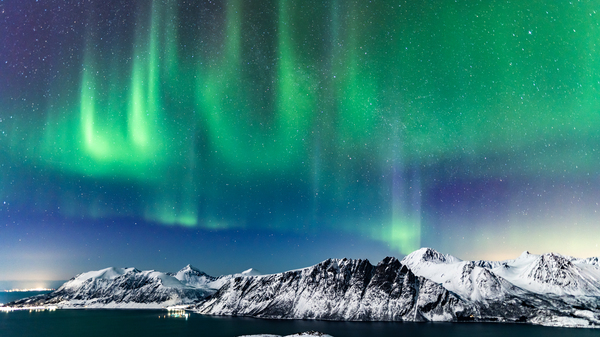
Aurora Colors: What Wisconsin Viewers Might See
While green remains the most common auroral hue, 2025’s solar maximum could unveil a broader spectrum:
- Green (557.7 nm): Most frequent, caused by oxygen at 60-150 mile altitude
- Red (630.0 nm): Higher-altitude oxygen, visible during strong storms
- Purple/Blue (427.8 nm): Nitrogen emissions, rare in Wisconsin
- Pink: Mix of red and blue emissions during intense activity

During exceptional 2025 displays, Wisconsin viewers might witness rare “corona” formations where auroral rays appear to converge overhead, creating a crown-like effect. These events occur when the magnetic field aligns perfectly with your viewing location.
Comments