
NASA’s Perseverance rover has uncovered rocks with bizarre “leopard-spot” patterns in Mars’ Jezero Crater, potentially holding the most compelling evidence for ancient Martian life ever discovered. These peculiar formations show mineral and organic signatures strikingly similar to microbial biosignatures found on Earth.
The rover collected samples from an ancient lakebed where iron and phosphate patterns suggest possible past biological activity. While scientists caution that further analysis is needed, the discovery marks a pivotal moment in humanity’s search for extraterrestrial life.
- Perseverance rover discovered “leopard-spotted” rocks in Mars’ Jezero Crater with mineral patterns resembling Earth’s microbial biosignatures, potentially the strongest evidence yet for ancient Martian life.
- The iron and phosphate-rich samples, collected from an ancient lakebed, show chemical interactions similar to those created by microbial activity on Earth.
- NASA’s planned Mars Sample Return mission faces budget challenges, but confirmation of these findings could revolutionize our understanding of life in the universe if samples reach Earth by the 2030s.
- Scientists debate whether the patterns represent biological activity or natural mineral deposits, emphasizing the need for further analysis to confirm their origin.
Life on Mars NASA: Did Perseverance Rover Find Alien Fossils in Jezero Crater’s Leopard-Spotted Rocks?
NASA’s Groundbreaking Discovery: Leopard-Spotted Rocks Hint at Ancient Martian Life
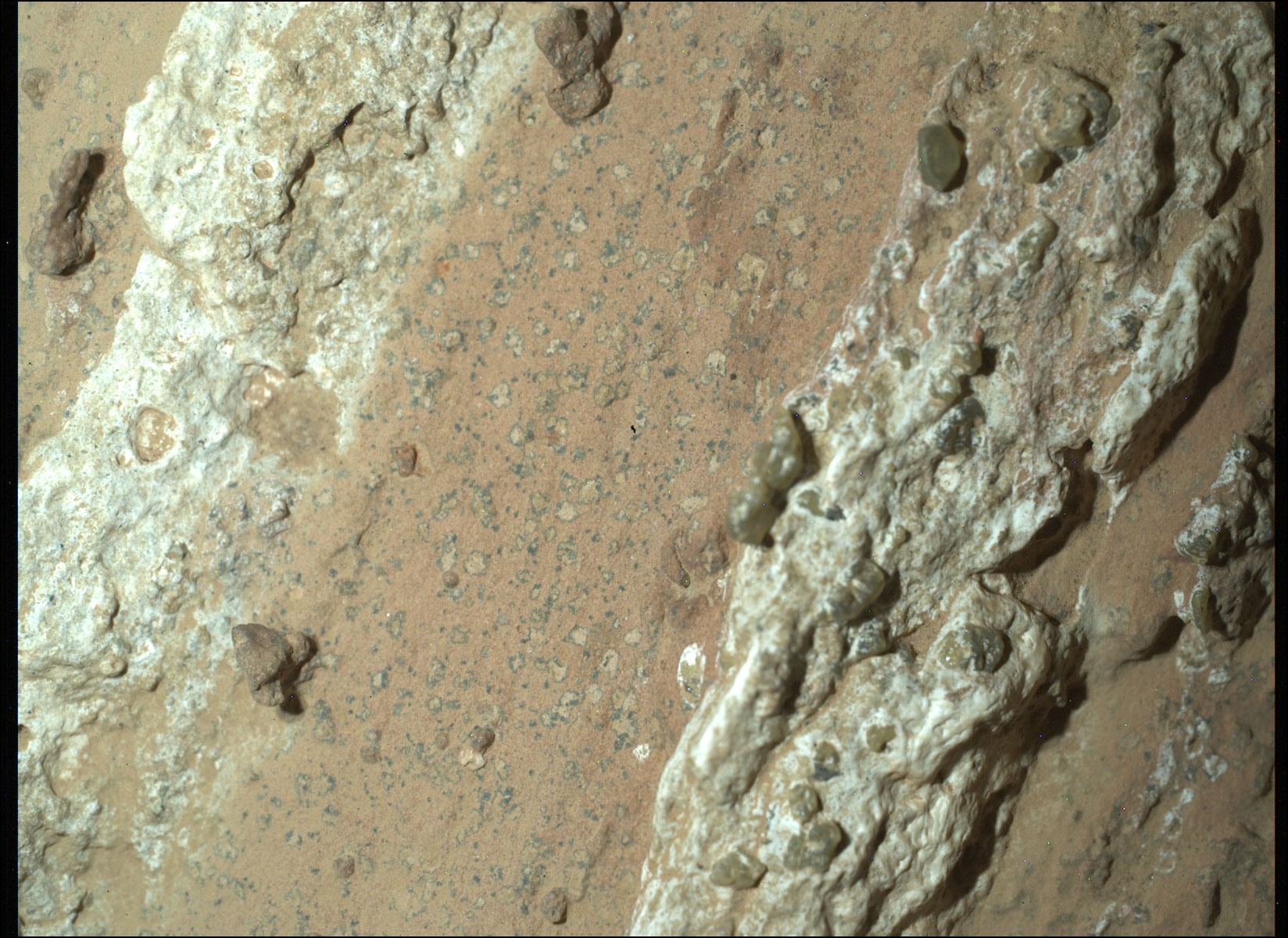
NASA’s Perseverance rover has uncovered astonishing rock formations in Mars’ Jezero Crater featuring peculiar “leopard spots” – circular patterns with dark rims and lighter centers. These formations measuring just millimeters across have sparked intense scientific debate, as they represent the most compelling potential evidence of ancient Martian life ever discovered. The rover’s instruments detected concentrated iron and phosphate minerals within these spots, compounds that on Earth frequently form through biological activity.
What makes these findings particularly intriguing is their geological context. The spotted rocks were found in mudstone layers that formed in what was once a lakebed environment approximately 3.5 billion years ago – precisely the type of setting where microbial life could have thrived. The patterns bear striking resemblance to microbially induced sedimentary structures found in Earth’s ancient rocks, though researchers caution that abiotic processes can sometimes produce similar features.

Scientific Analysis: Decoding Mars’ Mysterious Mineral Patterns

Detailed analysis reveals the leopard spots consist of hematite (iron oxide) rings surrounding phosphate-rich centers – a mineral association that on Earth often indicates past microbial activity. The rover’s SHERLOC instrument also detected organic molecules spatially associated with these features, though NASA emphasizes these could have non-biological origins.
Scientists have proposed several formation mechanisms:
- Biological: Mineral deposition around microbial colonies or their byproducts
- Chemical: Concentric mineral growth from fluctuating water chemistry
- Diagenetic: Post-depositional alteration of sediments
The biological hypothesis gains credibility from the spots’ organized distribution and similarity to terrestrial microbialites. However, Mars’ distinct geological history means we must consider alternative explanations not seen on Earth.
The Mars Sample Return Mission: Scientific Triumph or Budgetary Boondoggle?
NASA’s ambitious Mars Sample Return program aims to bring these intriguing rocks to Earth by the early 2030s, but faces significant hurdles. The multi-phase mission requires:
| Phase | Challenge | Estimated Cost |
|---|---|---|
| Sample Retrieval | Precision landing near Perseverance’s cache | $2.8 billion |
| Launch from Mars | First-ever rocket launch from another planet | $3.2 billion |
| Earth Return | Secure containment of potentially bioactive material | $1.5 billion |
Critics argue the projected $10-12 billion total cost could fund dozens of other planetary missions. Supporters counter that confirming extraterrestrial life would represent a paradigm shift in human understanding worth any price.
Astrobiological Implications: Rethinking the Search for Extraterrestrial Life
If confirmed as biosignatures, these findings would profoundly impact astrobiology by demonstrating that life arose independently twice within our own solar system. This would suggest life emerges readily given suitable conditions, dramatically increasing the probability of finding life elsewhere in the universe.
The discovery has already influenced planning for future missions:
- ESA’s ExoMars rover will prioritize similar mineral formations
- NASA’s upcoming Dragonfly mission to Titan will include leopard-spot detection capabilities
- Next-generation space telescopes will search for analogous mineral patterns on exoplanets
The Great Filter Hypothesis
Some theorists suggest these findings might relate to the “Great Filter” concept – the idea that something prevents life from progressing to intelligence. If Martian life existed but didn’t advance beyond microbes, it could imply the filter lies ahead of humanity rather than behind us.
Technological Innovations: Next-Generation Tools for Biosignature Detection

The leopard-spot discovery has accelerated development of advanced instruments for extraterrestrial biosignature detection. Cutting-edge technologies now undergoing testing include:
- Nanoscale secondary ion mass spectrometry (NanoSIMS): Can map isotopic ratios at 50nm resolution
- CRISPR-based life detectors: Designed to identify alien nucleic acid structures
- Quantum-enhanced spectrometers: Offer unprecedented sensitivity to organic compounds
- Atomic force microscopes: Capable of imaging individual molecules in 3D
These tools aim to overcome the limitations of current rover instruments, which can detect potential biosignatures but cannot definitively confirm biological origins. The next generation of Mars missions may carry laboratory-grade analysis suites weighing just kilograms rather than tons.
Alternative Explanations: Could These Patterns Have Non-Biological Origins?
While the biological hypothesis attracts headlines, several plausible abiotic mechanisms could explain the leopard spots:
| Mechanism | Evidence For | Evidence Against |
|---|---|---|
| Liesegang banding | Creates similar concentric mineral rings | Typically larger scale than observed |
| Evaporative concentration | Mars had episodic drying periods | Doesn’t explain organic associations |
| Impact-generated hydrothermal systems | Jezero has impact-modified terrain | Patterns too uniformly distributed |
The scientific consensus maintains that while biological origins cannot yet be confirmed, the combination of features makes these among the most promising potential biosignatures ever found beyond Earth.
The Burden of Proof Dilemma
Astrobiologists face an extraordinary challenge: how to prove something is a fossil when we have no prior examples of Martian life to compare against. Current protocols require multiple independent lines of evidence before claiming definitive proof of extraterrestrial life.
Comments