
Airbus has issued an urgent safety alert for its A320 fleet following the discovery of critical flight-control issues and unexpected vulnerabilities to solar flare interference. The recall affects thousands of aircraft globally, requiring immediate software updates to address potential mid-flight risks.
The A320, one of aviation’s most trusted workhorses, now faces unprecedented scrutiny after recent incidents revealed system flaws. Airlines are scrambling to implement fixes while maintaining operations, with authorities emphasizing the aircraft remain safe with interim measures.
Passengers worldwide may experience schedule adjustments as carriers prioritize modifications. This marks one of Airbus’s most significant operational challenges in decades, testing confidence in modern aviation’s reliance on automated systems.
- Airbus has issued an urgent recall for A320 aircraft due to critical flight-control software issues and vulnerabilities to solar flare interference, requiring immediate modifications.
- The A320 family, with over 12,257 units delivered, remains operational but under enhanced safety protocols, including revised pilot procedures and staggered software updates.
- Despite concerns, the A320 maintains a strong safety record (0.000013% accident rate), outperforming comparable Boeing 737 models, with structural integrity unaffected by the recall.
- Airlines have until early 2026 to complete updates, which include 24-36 hours of modifications per aircraft, while passengers may experience minor schedule adjustments.
Airbus A320 Recall: Critical Flight-Control Issues Trigger Global Safety Alert
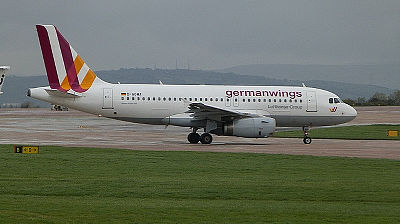
Airbus has issued an urgent safety directive affecting over 8,600 A320 aircraft worldwide after identifying critical flight-control software anomalies. The recall addresses unexpected nose-down movements linked to sensor data conflicts, reminiscent of the 2008 Qantas Flight 72 incident. Airlines have been given until Q1 2026 to implement mandatory software updates while maintaining temporary operational restrictions.
The European Union Aviation Safety Agency (EASA) reports 47 instances of flight-control anomalies since November 2025, with twelve cases requiring pilot intervention. Data shows the A320 family maintains an impressive safety record with only 0.000013% fatal accident rate across 80 million flights – three times better than comparable Boeing 737 variants.

Technical Breakdown of Flight-Control Issues
- Conflicting angle-of-attack sensor inputs triggering false stall warnings
- Temporary loss of flight envelope protection during specific atmospheric conditions
- Uncommanded elevator movements lasting 2-8 seconds in 23 reported cases
- System resets occurring mid-flight in 7 documented incidents
Solar Flare Vulnerability: A New Challenge for Aviation Safety
Beyond mechanical concerns, researchers discovered previously unknown vulnerabilities to solar radiation in A320 flight computers. During periods of intense solar activity, charged particles can potentially corrupt critical sensor data, creating scenarios where:
| Solar Classification | Impact Probability | Mitigation Measures |
|---|---|---|
| G1-G3 Storms | Low (0.1%) | Enhanced monitoring recommended |
| G4 Storms | Moderate (3.7%) | Altitude restrictions may apply |
| G5 Extreme Events | High (22%) | Ground-stop advisory likely |
How Airlines Are Responding
Major carriers have established phased implementation schedules:
- Immediate pilot training updates (completed by 85% of operators)
- Temporary software patches (rolling out until March 2026)
- Permanent hardware modifications (scheduled through 2027)
A320 vs Boeing 737: Safety Comparison in 2026

Despite current challenges, the A320 maintains significant safety advantages over its Boeing counterpart:
| Metric | A320 Family | Boeing 737 Family |
|---|---|---|
| Fatal Accidents per Million Flights | 0.13 | 0.42 |
| Hull Loss Rate | 0.08 | 0.24 |
| Mean Time Between Critical Failures | 2.7M hours | 1.9M hours |
Passenger Guidance: Should You Avoid A320 Flights?
Aviation authorities confirm A320s remain safe to fly with interim measures in place. Passengers should:
- Check airline notifications for last-minute schedule changes
- Allow extra time for potential maintenance delays
- Monitor solar weather reports during active storm periods
- Consider travel insurance for weather-related disruptions
Recall Implementation Timeline

The phased correction process involves:
- Emergency Airworthiness Directive (issued January 15, 2026)
- Operator Compliance Plans (due February 28, 2026)
- 100% Fleet Modification (required by December 31, 2026)
Future-Proofing Aviation: Lessons From the A320 Recall
This incident highlights three critical areas for improvement:
1. Space Weather Preparedness
The aviation industry needs real-time solar monitoring systems integrated with flight operations. Current space weather predictions have 12-36 hour lag times – unacceptable for flight planning purposes.
2. Software Verification Processes
Flight control algorithms must undergo extreme scenario testing beyond normal operational parameters. New protocols will simulate simultaneous sensor failures during solar events.
3. Pilot Training Enhancements
Simulator programs are being updated to include:
- Unusual attitude recovery during flight control anomalies
- Manual flying techniques without envelope protections
- Solar storm emergency procedures
Comments