
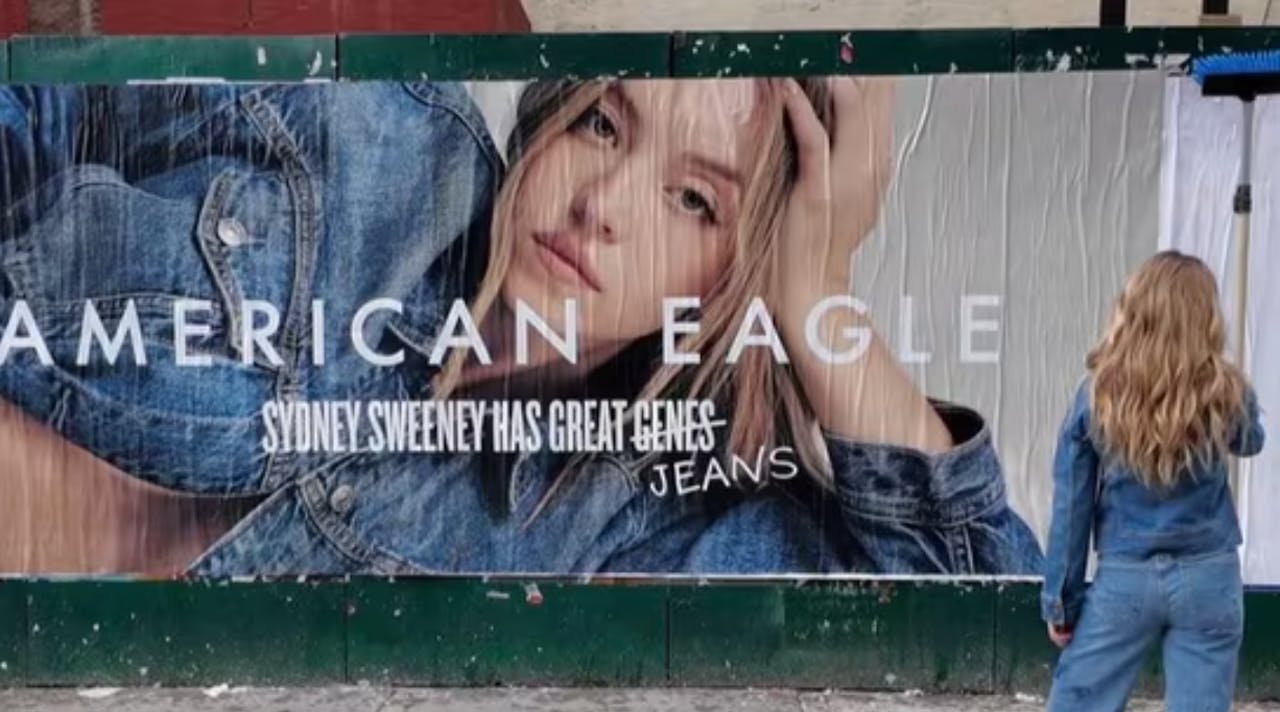
As debates rage over Sydney Sweeney’s controversial “great genes” campaign for American Eagle, all eyes turn to body positivity icon Lizzo for her reaction. The ad’s provocative wordplay has sparked accusations of promoting eugenics while simultaneously driving a 21% stock surge, creating a cultural flashpoint at the intersection of beauty standards and brand strategy.
While Lizzo remains silent, her fans demand the singer’s trademark perspective on the campaign that celebrates conventional attractiveness with Darwinian undertones. The controversy echoes tensions Lizzo has navigated throughout her career – where commercial appeal clashes with inclusive messaging in fashion’s ever-polarizing landscape.
- Lizzo’s perspective on Sydney Sweeney’s “great jeans/genes” ad controversy remains highly anticipated, as fans speculate whether she’ll critique its Eurocentric undertones or applaud its boldness.
- American Eagle’s stock surged 21% amid the backlash, highlighting how controversy fuels engagement, while critics accuse the campaign of promoting eugenics through its provocative wordplay.
- The ad has polarized reactions, with Gen Z consumers displaying ambivalence—some viewing it as playful subversion, while others see it as male-gazed marketing wrapped in woke packaging.
“Lizzo’s Potential Response to Sydney Sweeney’s American Eagle Controversy: What Fans Are Speculating”
The music industry and body positivity icon Lizzo hasn’t officially commented on Sydney Sweeney’s controversial American Eagle “great genes/jeans” campaign, but her fanbase is eagerly awaiting her perspective. Given Lizzo’s history of challenging conventional beauty standards and pushing for inclusivity in fashion, many believe she might offer a nuanced take on the situation.
The campaign’s problematic wordplay has drawn accusations of promoting eugenic ideals, with critics arguing the “great genes” phrasing reinforces harmful beauty standards. Supporters counter that it’s simply clever marketing that celebrates Sweeney’s natural physique. As this debate rages across social media, Lizzo’s voice could provide crucial insight given her experience navigating similar controversies with her own shapewear line, Yitty.

The controversy highlights how even seemingly innocent fashion campaigns can carry deep cultural implications in today’s hyper-aware consumer landscape. While American Eagle’s stock surged 21% amid the backlash—suggesting the controversy may have actually benefited the brand financially—the ethical questions remain unresolved.

“Comparing Sydney Sweeney and Lizzo’s Approaches to Body Positivity Backlash”
The contrasting public relations strategies between Sydney Sweeney and Lizzo reveal fundamentally different approaches to handling controversy. Sweeney’s team has largely remained silent, letting the visual impact of the American Eagle campaign speak for itself. Meanwhile, Lizzo has built her brand on direct engagement with critics, often addressing backlash through social media livestreams and candid posts.
“The Power of Silence vs. The Power of Engagement”
Sweeney’s non-response appears calculated, allowing the provocative imagery to dominate conversations without muddying the waters with personal commentary. This approach lets the campaign retain its mystique while avoiding potentially polarizing personal statements. The 21% stock surge suggests this strategy may be commercially effective, though it leaves unanswered questions about the campaign’s underlying message.
Lizzo, by contrast, has mastered the art of turning criticism into engagement opportunities. Her trademark clapbacks create viral moments that reinforce her authenticity and connection with fans. However, this approach can sometimes prolong negative news cycles—her 2023 Shape Magazine controversy remained in headlines for weeks due to her continued commentary.
“Political Reactions to the American Eagle Campaign: Where Does Lizzo Stand?”
The controversy took an unexpected political turn when conservative figures like JD Vance mocked Democratic criticism of the ads, while White House officials dismissed concerns as “moronic liberalism.” This politicization creates a complex landscape for Lizzo, who’s typically avoided overt partisan alignment while advocating progressive values.

Lizzo’s past statements suggest she might address systemic issues rather than specific political figures. During the 2023 “body diversity in country music” debate, she focused on industry structures rather than individual critics. This balanced approach allows her to maintain broad appeal while still advocating for change.
- Conservative reactions: Framed criticism as excessive political correctness
- Liberal concerns: Saw undertones of racial exclusivity in the messaging
- Brand impact: American Eagle benefited from the polarization with increased sales
“Gen Z’s Mixed Reactions to the Campaign: What Lizzo’s Fanbase Thinks”
A surprising generational divide emerged in reactions to Sweeney’s American Eagle campaign. While older critics strongly denounced the perceived eugenic implications, many Gen Z consumers showed ambivalence—appreciating the playful subversion of genetic determinism while acknowledging its problematic aspects.

This generational perspective gap mirrors divisions seen during previous controversies involving Lizzo’s Yitty line. Her younger fanbase appears similarly split—some demanding she boycott American Eagle, while others argue the controversy distracts from more substantive issues.
“Male-Gazed Marketing: Why Sweeney’s Ads Divide Women’s Opinions”
The American Eagle campaign’s apparent orientation toward male viewers—despite targeting young women—created cognitive dissonance among female consumers. This tension reflects broader debates about female empowerment versus objectification in marketing.
| Perspective | View of Campaign |
|---|---|
| Traditional Feminists | Sees pandering to male gaze |
| Modern Consumers | Views as reclaiming genetic discourse |
| Lizzo’s Approach | Celebrates all bodies without comparison |
The campaign’s success despite backlash suggests conventional attractiveness still sells—a reality that Lizzo’s movement continues to challenge. This tension between aspirational marketing and inclusive representation remains unresolved in the fashion industry.
Comments