
The Gaza Strip crisis has escalated dramatically as Israel’s ground offensive intensifies, pushing the humanitarian catastrophe to new extremes. Over 46,000 Palestinian civilians have been killed since the conflict began, with 90% of Gaza’s population now displaced amid widespread destruction.
The UN warns that famine was barely avoided through recent aid efforts, but renewed fighting threatens to collapse the fragile truce. As Israel advances into Gaza City, Hamas retains leverage through hostages while civilian casualties continue to mount with no end in sight.
- Israel launches ground offensive in Gaza City, marking a significant escalation after months of airstrikes, with intense clashes reported in northern Gaza.
- Civilian death toll reaches 46,000, displacing 90% of Gaza’s population and creating a severe humanitarian crisis.
- The UN narrowly avoided famine through a fragile ceasefire, but renewed fighting threatens to plunge the region back into catastrophe.
- UN commission accuses Israel of genocide, while Israel maintains its operations target Hamas militants.
- Israel’s “mowing the grass” strategy now includes holding captured territory, creating buffer zones, and systematically destroying tunnels.
Gaza Strip Crisis: Civilian Death Toll Reaches 46,000 as Israel’s Ground Offensive Escalates
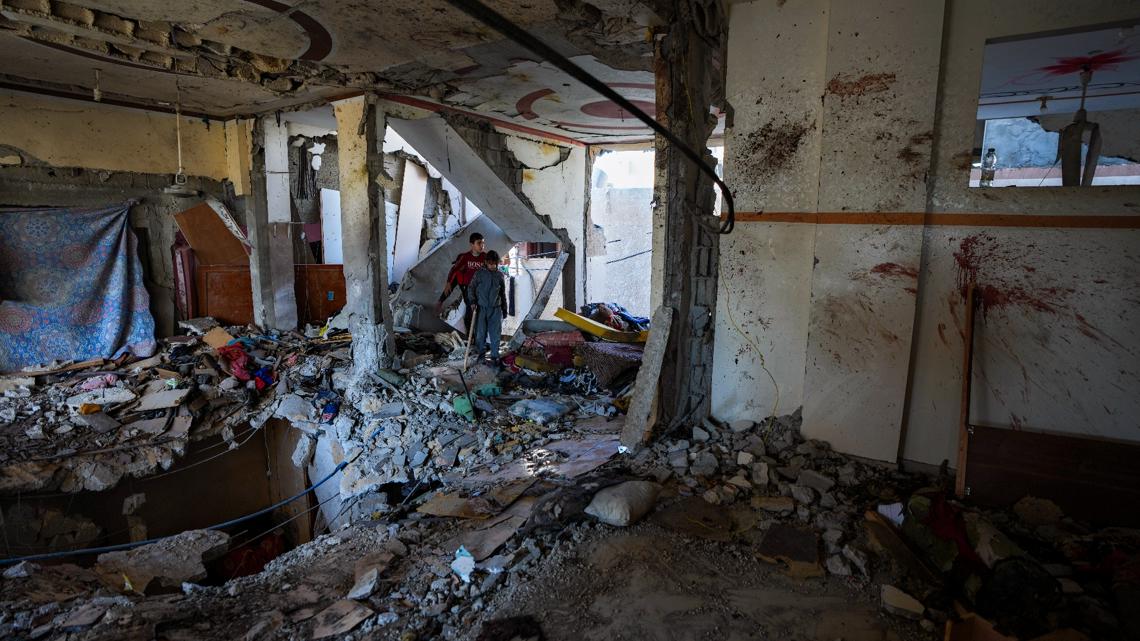
The humanitarian catastrophe in Gaza has reached unprecedented levels as Israel’s ground offensive enters its third month. According to Palestinian health authorities, over 46,000 civilians have been killed since the conflict began in October 2023, with more than 70% being women and children. The bombardment has reduced entire neighborhoods to rubble, leaving 90% of Gaza’s 2.3 million residents displaced.
Key crisis indicators:
- 1.7 million people internally displaced
- 60% of housing units destroyed or damaged
- Only 10 out of 36 hospitals partially functioning
- Average daily calorie intake dropped to 900 per person

Israel’s Military Strategy: From “Mowing the Grass” to Occupation
Israel’s current operation marks a significant departure from its traditional “mowing the grass” strategy of periodic limited conflicts. Military analysts identify three phases in the new approach:
| Phase | Objective | Current Status |
|---|---|---|
| 1 | Northern Gaza isolation | Completed |
| 2 | Central Gaza division | Ongoing |
| 3 | Southern Gaza operations | Preparing |
The Israeli Defense Forces (IDF) have established permanent bases in several strategic locations, suggesting intentions beyond temporary security measures. This represents the first long-term Israeli military presence in Gaza since 2005.
What Makes This Offensive Different?
- Sustained ground presence rather than withdrawal
- Systematic destruction of civilian infrastructure near borders
- Creation of Israeli-controlled “buffer zones”
Humanitarian Catastrophe: Famine Conditions and Collapsing Systems

The UN reports that 93% of Gaza’s population faces crisis-level hunger, with most families skipping meals for entire days. Before the recent ceasefire, only 150-200 aid trucks were entering Gaza daily – less than 20% of pre-war levels needed to sustain the population.
Critical infrastructure failures:
- Water production at 5% of normal capacity
- 90% lack access to clean water
- Sewage systems collapsed, creating public health crisis
- Communications blackouts occur weekly
International Response and Accusations of War Crimes
The International Court of Justice (ICJ) has opened investigations into potential violations of the Genocide Convention. Several European countries have suspended arms sales to Israel, while the US continues military support with minimal conditions.
| Institution | Action | Date |
|---|---|---|
| ICJ | Provisional measures order | January 2024 |
| ICC | Arrest warrants requested | May 2024 |
| UNSC | Ceasefire resolution passed | March 2024 |
Despite international pressure, Israeli officials maintain their operations comply with international law, arguing Hamas uses civilian infrastructure for military purposes. However, legal experts note even such circumstances don’t absolve attackers of proportionality requirements.
Possible Endgame Scenarios for the Gaza Conflict

As the conflict continues with no clear military resolution, analysts outline several potential outcomes:
Scenario 1: Permanent Israeli Security Zone
Israel maintains control of 20-30% of Gaza along the border, relocating remaining Palestinians to central camps. This would likely provoke sustained international condemnation but could prevent Hamas regrouping.
Scenario 2: UN Administration
A multinational peacekeeping force temporarily governs Gaza while Palestinian Authority is rebuilt. This requires Hamas surrender and Israeli withdrawal – both unlikely currently.
Scenario 3: Protracted Insurgency
Continued guerrilla warfare by Hamas remnants in tunnels and urban areas, with Israeli airstrikes persisting for years. This would perpetuate civilian suffering indefinitely.
The Humanitarian Path Forward: Ceasefire and Reconstruction
Immediate priorities to prevent further catastrophe:
- Permanent ceasefire agreement with international guarantees
- Unrestricted humanitarian access through all crossings
- Massive reconstruction initiative (estimated $30-50 billion)
- Release of all remaining hostages and political prisoners
The window for preventing permanent devastation is closing rapidly. Without immediate action, Gaza may become uninhabitable – creating a crisis far beyond current horrific levels.
Comments